Distress: DSC alert and MAYDAY
A designated DSC distress alert with a good position, the MAYDAY on channel 16, the acknowledgement read and the log.
- Phase 1: The bridge, one piece of equipment at a time
- 4 steps on the bridge
- 4 oral questions
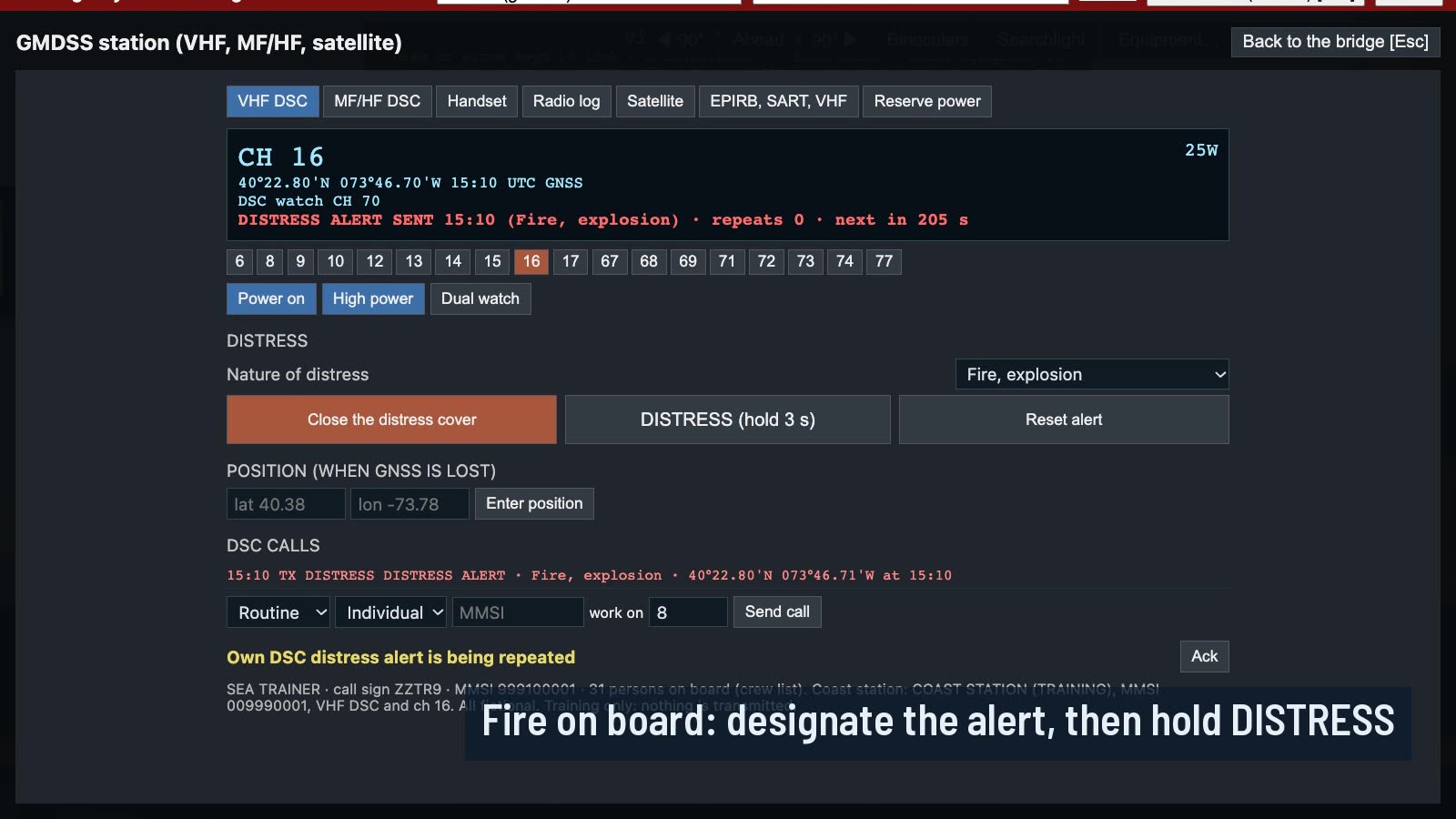
What you do on the bridge
- DSC distress alert
- MAYDAY by voice
- The acknowledgement
- Radio log
The oral questions, and what a good answer covers
The key points are in our own words. In the course, these questions come once you have done the job.
Give me a MAYDAY call and message for this yacht on fire.Often asked
A good answer covers:
- MAYDAY three times, THIS IS, the name three times, the call sign and the MMSI
- MAYDAY, the name, call sign and MMSI once more
- The position, as latitude and longitude or a bearing and distance from a known point
- The nature of the distress: fire
- The assistance wanted
- The number of persons on board, and anything else that helps the rescue
- OVER
Show me on the bridgeThe GMDSS station: the VHF DSC, the handset and the radio log.
What does a DSC distress alert carry, and on which VHF channel does it go?Often asked
A good answer covers:
- Channel 70 on VHF
- Own MMSI, the position and the time of that position
- The nature of distress, if designated; undesignated if there is no time
- The channel for the follow-on voice traffic, channel 16 on VHF
- It repeats automatically every few minutes until it is acknowledged or reset
Why does the position in the DSC matter, and what if the GNSS has failed?
A good answer covers:
- The rescuers go to the position the alert carries
- Check it and its time before sending; an old position can be miles out
- If the GNSS is lost, enter the position and its time by hand, at least every four hours; most sets warn when it is getting old
- The radio log should note the position used
The coast station acknowledges your alert by DSC. What do you do, and what must you not do?
A good answer covers:
- Read the acknowledgement; the automatic repeats stop
- Carry on the distress traffic by voice on channel 16 with the coast station
- Do not send a DSC acknowledgement or relay of your own alert
- Write the alert, the acknowledgement and the traffic in the radio log
How the lesson runs
The tutor's narration from the lesson, step by step. On the bridge, each control lights up as it is named.
Brief
There's a fire in the engine room. Half a minute from now the master will order a distress alert. From that order you have two minutes to get it away.
We send the DSC alert first, designated fire, then the MAYDAY by voice on channel sixteen. Then we wait for the coast station, and write it all down.
DSC distress alert
Go to the GMDSS station. Before you press anything, check the position on the VHF display and its time. The rescuers will go where the alert says we are, so it must be less than ten minutes old.
Choose fire as the nature of distress, so the rescue centre knows what help to send. Lift the cover and hold the distress button for three seconds.
MAYDAY by voice
Within two minutes of the alert, the MAYDAY on channel sixteen. MAYDAY three times, our name three times, call sign and MMSI, then the position, the nature, the help we want and the persons on board. End with OVER.
The acknowledgement
The coast station will acknowledge by DSC. Read it, so you know they have us.
Don't send a DSC acknowledgement or a relay yourself. It's our own alert, and that only clutters the channel.
Radio log
Write the GMDSS radio log: the time of the alert, the position sent, the MAYDAY, and the acknowledgement. In the middle of an emergency it's easy to forget, and it's the record that counts.
Do it, then explain it.
Read the answers here for free. With a pass you work this lesson on the bridge, then practise its questions and mark your answers.