False distress alert: stop it and cancel it
Reset a mistaken DSC alert before it repeats, cancel it by voice on channel 16, close the cover and log it.
- Phase 1: The bridge, one piece of equipment at a time
- 4 steps on the bridge
- 3 oral questions
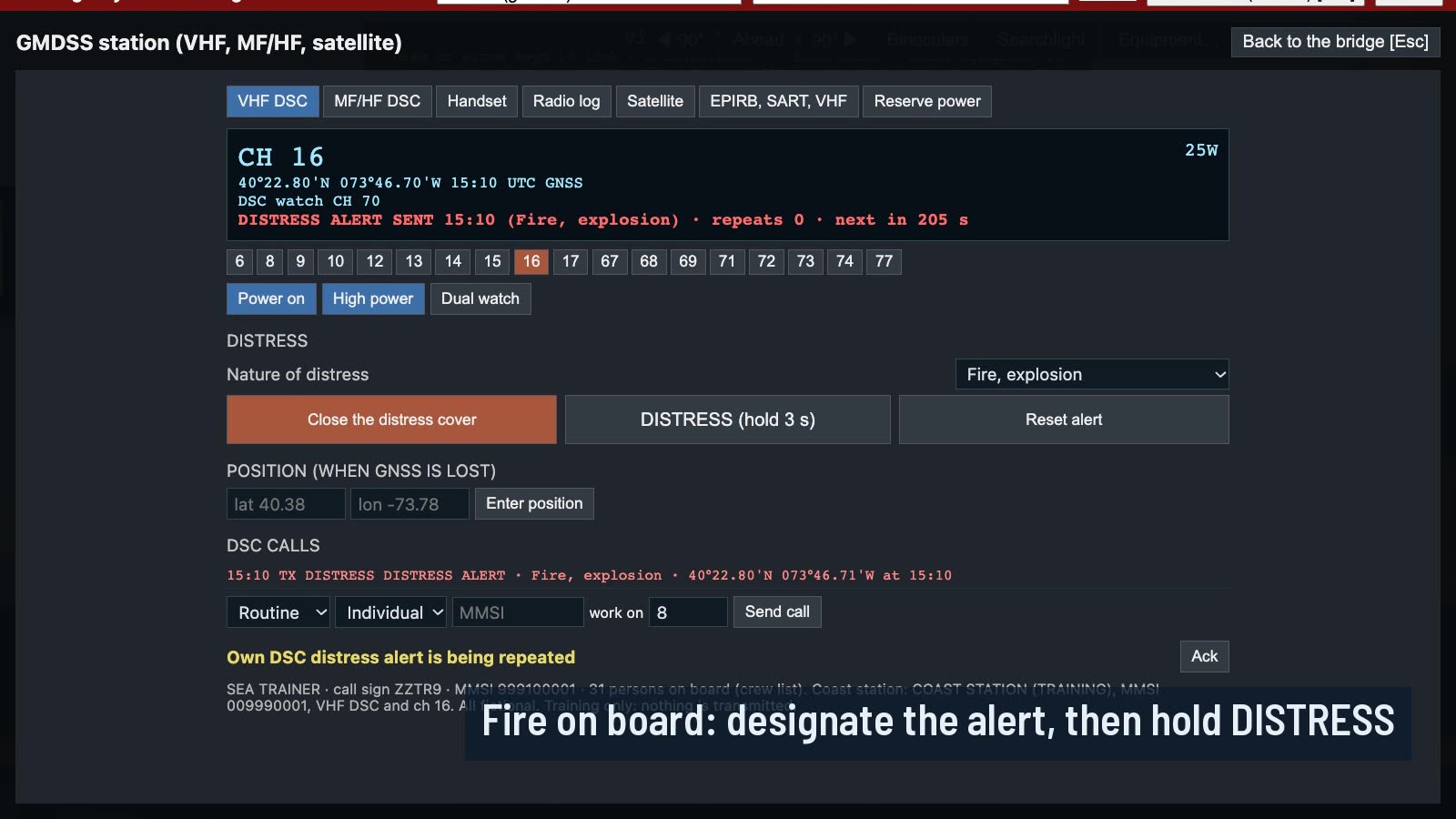
What you do on the bridge
- Reset the alert
- Cancel by voice
- Close the cover
- Radio log
The oral questions, and what a good answer covers
The key points are in our own words. In the course, these questions come once you have done the job.
You have sent a VHF DSC distress alert by mistake. What do you do?Often asked
A good answer covers:
- Reset the equipment at once, so it does not repeat
- Cancel by voice on channel 16 to all stations
- ALL STATIONS three times, THIS IS the name three times, call sign and MMSI
- The position, then: please cancel my distress alert of, the date and time in UTC
- Close the distress cover, and write the false alert and its cancellation in the radio log
- Tell the master, and listen for any station that answers
Show me on the bridgeThe VHF DSC at the GMDSS station. Find the reset and the cover.
Why does a false alert matter so much, and how do you avoid sending one?
A good answer covers:
- It ties up the rescue services and ships that may be needed for a real distress
- It can bring a search to a place where nobody is in danger
- Know the equipment, keep the distress cover closed, and test only by the proper test call
- Train the crew, and label the distress controls clearly
Will you be in trouble for cancelling a false alert?
A good answer covers:
- Failing to cancel, or hiding it, is the real fault
- The record in the radio log shows what happened and what was done
How the lesson runs
The tutor's narration from the lesson, step by step. On the bridge, each control lights up as it is named.
Brief
In about thirty seconds, someone will set off a distress alert by mistake. It happens, and what matters is how fast you put it right.
We stop it before it repeats, cancel it by voice on channel sixteen, close the cover, and log it.
Reset the alert
The alert repeats by itself every few minutes until it is reset. Each repeat looks like a fresh distress to everyone listening. Reset it now.
Cancel by voice
Now tell everyone it was a mistake, on channel sixteen, within five minutes. ALL STATIONS three times, THIS IS our name three times, call sign and MMSI, and our position.
Then: cancel my distress alert of, and the time it went, in UTC. Look the time up in the DSC calls list, not your memory.
Close the cover
Close the distress cover again. It's there so this doesn't happen twice.
Radio log
Last, the radio log: the time the alert went, when it was reset, and the cancellation sent. Write it plainly. A false alert well handled is nothing to hide.
The rules and guidance behind it
- IMO MSC.514(105): guidelines for the avoidance of false distress alerts (from 1 January 2024)
Do it, then explain it.
Read the answers here for free. With a pass you work this lesson on the bridge, then practise its questions and mark your answers.