Distress alert received: the coast station does not answer
Read the alert, listen on 16, hold off the DSC, acknowledge by voice, tell the coast station, and find the liferaft.
- Phase 6: Emergencies and ship handling
- 7 steps on the bridge
- 4 oral questions
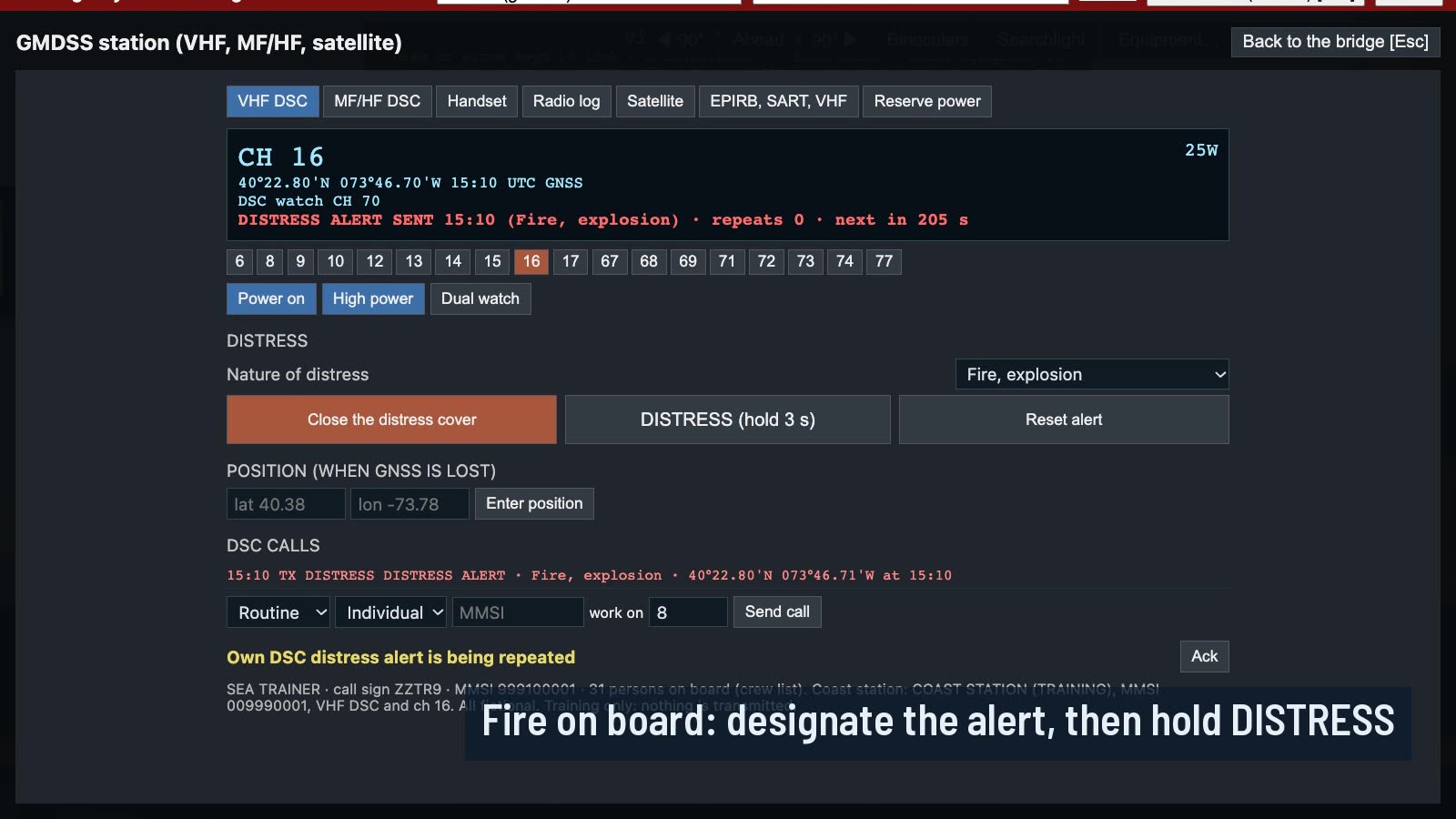
What you do on the bridge
- Read the alert
- Listen on sixteen
- Hold off the DSC
- Acknowledge by voice
- Tell the coast station
- Find the liferaft
- Radio log
The oral questions, and what a good answer covers
The key points are in our own words. In the course, these questions come once you have done the job.
You receive a VHF DSC distress alert from another vessel. Talk me through what you do.Often asked
A good answer covers:
- Read the alert: who she is, where she is and what has happened; call the master
- Listen on channel 16 for the coast station and for her voice MAYDAY
- Do not acknowledge by DSC: the coast station or rescue centre should do that
- If the coast station has not answered after a short while, about five minutes, acknowledge her by voice on 16
- Tell the coast station or rescue centre by any means, for example a DSC relay addressed to it
- Go to her assistance unless the master decides otherwise, and log everything
Show me on the bridgeA distress alert will arrive in the DSC calls list a minute in.
Why should a ship not acknowledge a VHF DSC distress alert by DSC, or relay it to all ships?Often asked
A good answer covers:
- A DSC acknowledgement stops her set repeating the alert
- If the coast station missed the first alert, it then never hears the repeats
- An all-ships relay spreads the alert and can start a chain of relays that confuses the picture
- Relay to the coast station or rescue centre by name instead, when it is needed
Give me a voice acknowledgement of a MAYDAY.
A good answer covers:
- MAYDAY
- The name of the vessel in distress three times (or her MMSI or call sign)
- THIS IS, our own name three times (or MMSI or call sign)
- RECEIVED MAYDAY
How will you find a liferaft with a SART on board?
A good answer covers:
- A radar SART shows on the X-band radar as a line of dots out from its position along its bearing
- Head for the dot nearest you; as you close the dots become arcs, then circles
- An AIS-SART shows as a SART target on the AIS, the ECDIS and the radar overlay, with its position
- Post lookouts, slow down as you close, and approach to make a lee for the raft
How the lesson runs
The tutor's narration from the lesson, step by step. On the bridge, each control lights up as it is named.
Brief
We're heading east at eight knots. In about a minute a fishing vessel ahead of us will send a DSC distress alert, and the coast station won't answer.
We follow the flowchart: read it, listen, don't press acknowledge, give the coast station time, then act. Her crew will take to the liferaft, and we'll find them by their SARTs.
Read the alert
The alarm sounds. Within a minute, read the alert: who she is, where she is, and what has happened. Call the master. Note her position, because the alert may be all you ever get from her.
Listen on sixteen
Now listen on channel sixteen within two minutes. The voice MAYDAY follows on sixteen, and so does the coast station's answer. Either select sixteen or put dual watch on.
Hold off the DSC
Don't press DSC acknowledge. That stops her set repeating, and if the coast station missed the first alert, it would never hear another.
And no relay to all ships. If a relay is needed, it goes to the coast station by name.
Acknowledge by voice
About five minutes on and still nothing from the coast station. Now we acknowledge her by voice, on sixteen, before ten minutes are up. MAYDAY, her name three times, THIS IS, our name three times, RECEIVED MAYDAY.
Tell the coast station
The coast station still has to know. Send a DSC distress relay addressed to it, not to all ships. Its MMSI is zero zero nine nine nine zero zero zero one.
Find the liferaft
Head for her position. When her crew take to the liferaft, it carries an AIS-SART and a radar SART. Look for the line of dots on the X-band radar and the SART on the AIS, and close to within half a mile.
Radio log
Write up the GMDSS radio log: the alert received, your voice acknowledgement, the relay to the coast station, and the times of each.
Do it, then explain it.
Read the answers here for free. With a pass you work this lesson on the bridge, then practise its questions and mark your answers.