Aground: stop, assess the damage, signal and report
She touches bottom at night on a falling tide: stop the engines, alarm and doors, the master, aground lights, tank and hull soundings, the tide, a PAN PAN, the VDR and the log.
- Phase 6: Emergencies and ship handling
- 9 steps on the bridge
- 4 oral questions
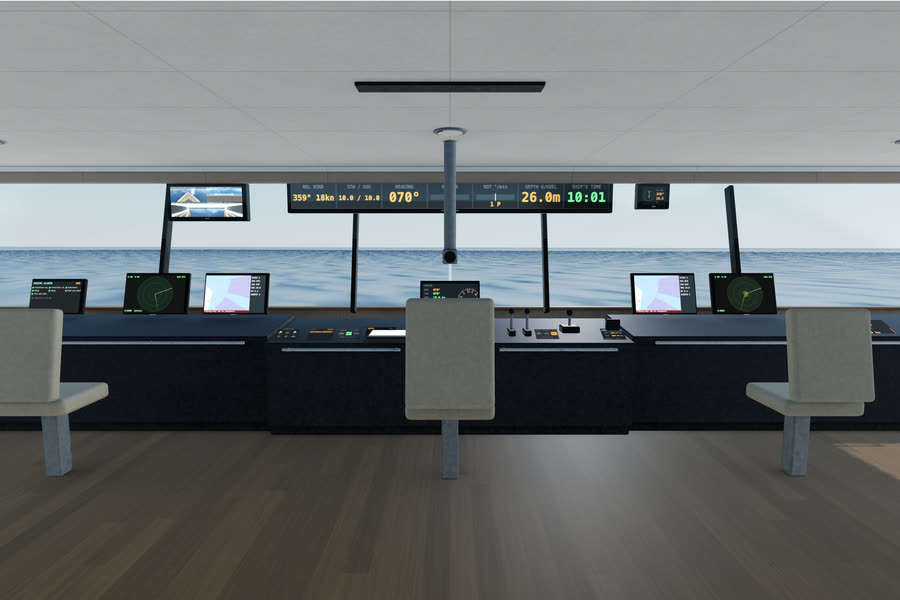
What you do on the bridge
- Stop the engines
- Alarm and watertight doors
- Call the master
- Show that she is aground
- Sound the tanks
- Soundings round the hull
- The tide
- Report it
- Save the VDR and log it
The oral questions, and what a good answer covers
The key points are in our own words. In the course, these questions come once you have done the job.
You run aground. What are your immediate actions?Often asked
A good answer covers:
- Stop the engines, and do not go astern until the damage and the soundings are known
- Sound the general alarm, close the watertight doors, and call the master
- Show the aground lights or shapes, and sound the aground signal in restricted visibility
- Sound all tanks and bilges, and repeat to see which are changing; check for oil escaping
- Take soundings round the hull, fix the position, and find the state and time of the tide
- Send an urgency message, or distress if in grave danger; save the VDR; log everything
Show me on the bridgeThe damage control board shows once she has touched.
Why should you not go astern straight after grounding?Often asked
A good answer covers:
- The hull may be holed: refloating could let her sink in deeper water, or flood faster once the hole is clear of the ground
- Going astern can drag the hull over the rocks and make the damage worse
- The propellers and rudder may be damaged or draw in sand and stones
- A falling tide can leave her worse; a rising one may float her off. Know which before acting
- Refloating is the master's decision, after damage, stability and tide are assessed
What lights, shapes and sound signals does a vessel aground show?Often asked
A good answer covers:
- By night, the anchor lights for her length, and two all-round red lights in a vertical line
- By day, three balls in a vertical line
- In restricted visibility, the anchor bell signal with three separate and distinct strokes on the bell immediately before and after it; the gong too if she is 100 m or more, and she may add a whistle signal
- She is not under way, so no masthead, side or stern lights
When would you send PAN PAN rather than MAYDAY after a grounding, and what does the message contain?
A good answer covers:
- PAN PAN when the ship or someone on board needs urgent help but is not in grave and imminent danger
- MAYDAY if she is flooding beyond control, breaking up, or lives are at risk
- PAN PAN three times, all stations or the coast station three times, this is the name three times, call sign and MMSI
- Then the position, the nature (aground), the help wanted and the number on board, ending OVER
How the lesson runs
The tutor's narration from the lesson, step by step. On the bridge, each control lights up as it is named.
Brief
We're heading north at eight knots at night, towards a shallow patch east of Sandy Hook. The tide is lower than the plan allowed for. In a couple of minutes she will touch bottom, and nothing you do now will stop it.
This lesson is about what comes next. The order matters: stop, alarm, master, signals, then find out how bad it is before anyone thinks of getting her off.
Stop the engines
She has touched. Stop the engines. Do not go astern: if she is holed, coming off could sink her in deeper water.
Alarm and watertight doors
Sound the general alarm on the fire panel at the back of the bridge, so everyone musters, and close the watertight doors from the damage control board. If she is holed, the doors keep the water to one compartment.
Call the master
Call the master: we're aground, the engines are stopped, the alarm is sounded and the doors are closed.
Show that she is aground
She is no longer under way. On the navigation light panel, switch off the masthead, side and stern lights, and show the anchor lights and the two all-round red lights. By day it would be three balls.
Sound the tanks
Now, how bad is it? On the damage control board, order a round of tank soundings. One round tells you little; sound again a few minutes later and compare.
A tank whose level is changing is breached. Water rising in a ballast tank or a void means we are taking water; a fuel tank falling means oil is getting out. Mark each breached tank on the board.
Soundings round the hull
Order soundings round the hull with the lead line: ahead, astern and each side. Where the deep water lies tells the master which way she might come off, if she comes off at all.
The tide
Work out the tide from the tables at the chart table: is it rising or falling? A rising tide may lift her off; a falling one leaves her harder aground, and may leave her lying on the damage.
Report it
We're holed but not in grave danger, so this is urgency, not distress. On the VHF, channel sixteen: PAN PAN three times, all stations, this is us three times, our position, aground and taking water, the help we want, and the number on board.
Save the VDR and log it
Save the VDR record now, before it is overwritten. Then write up the deck log: the time she touched, the position, the actions taken and the soundings.
The rules and guidance behind it
- COLREGs rule 30: anchored vessels and vessels aground; rule 35(h) sound signal
Do it, then explain it.
Read the answers here for free. With a pass you work this lesson on the bridge, then practise its questions and mark your answers.