Man overboard
Mark, throw, turn and alarm; a Williamson turn back down the track, then a slow approach upwind and engines stopped.
- Phase 6: Emergencies and ship handling
- 6 steps on the bridge
- 4 oral questions
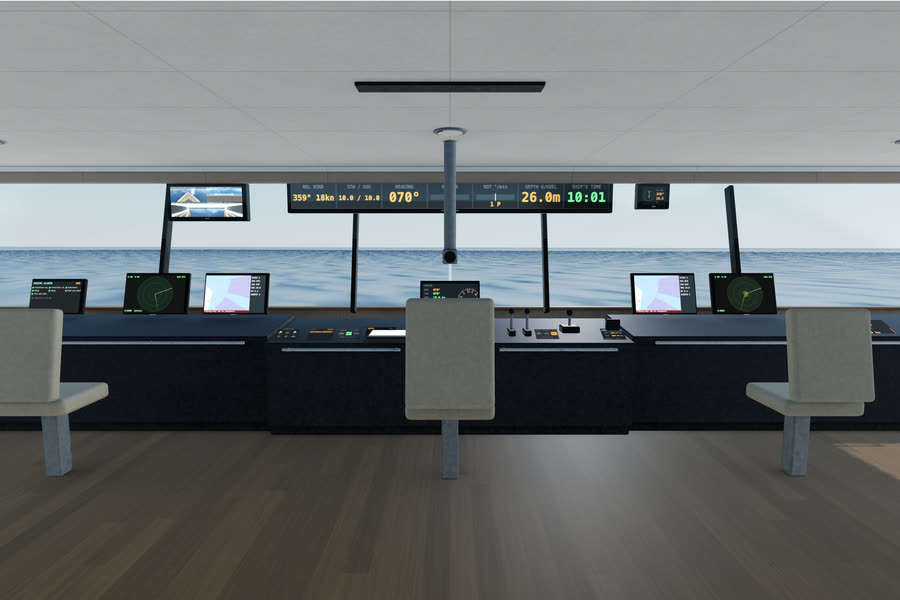
What you do on the bridge
- Mark and throw
- Alarm, hand steering and PA
- Call the Master
- Recovery turn
- Slow approach, upwind
- Deck log
The oral questions, and what a good answer covers
The key points are in our own words. In the course, these questions come once you have done the job.
Someone shouts man overboard, starboard side. What do you do in the first minute?Often asked
A good answer covers:
- Press the MOB button on the ECDIS or GNSS to mark the position
- Release a lifebuoy with light and smoke from the side the person went over
- Put the helm over towards that side to swing the stern clear of the person
- Sound the general alarm and the man overboard signal on the yacht's muster list, and hoist or show flag O
- Post a lookout to keep the person in sight and point
- Call the Master, and make a PA so the crew muster
Show me on the bridgeA minute in, the deckhand shouts. Be ready on the wheel.
Compare the Williamson turn and the Anderson turn. When would you use each?Often asked
A good answer covers:
- Williamson: hard over; at 60 degrees off the original course, hard over the other way; about 20 degrees short of the reciprocal, midships and steady on it
- Williamson brings her back down her own track: good at night, in poor visibility, or when the fall was not seen at once
- Anderson is fastest when the person is in sight and the ship turns tightly, such as a twin screw yacht
How do you make the final approach to pick the person up?Often asked
A good answer covers:
- Slowly, under full control, with the person always in sight
- Stop upwind of them so the yacht drifts down and gives them a lee
- Bring them alongside the recovery side, well forward of the propellers
- Stop the engines, or at least the propeller on that side, before they are close
- Recovery crew ready with a line, a sling or a recovery net, and the rescue boat as an option
Show me on the bridgeAt dusk, with a port side fall. Watch the lifebuoy light as you come back.
What does the MOB mark on the ECDIS give you, and what are its limits?
A good answer covers:
- The position where the button was pressed, with range and bearing back to it
- The time it was pressed and how long since
- It is fixed: the person drifts with the stream and the wind, the mark does not
- Press it at once, as a late press is already well astern of the person
- Lookouts and the lifebuoy light are still your best guide to where they are now
Show me on the bridgePress MOB the moment you hear the shout, then watch the range and bearing.
How the lesson runs
The tutor's narration from the lesson, step by step. On the bridge, each control lights up as it is named.
Brief
We're on passage at ten knots. In a minute or so someone will go over the side. The first seconds matter most, so I want you to know the order before it happens.
Mark the position, throw a lifebuoy, put the helm over, sound the alarm and call the Master. Then we turn back down our track and come in slowly, upwind of them, with the engines stopped.
Mark and throw
There it is. Press MOB on the ECDIS straight away, then release the lifebuoy on the side they went over. Its light and smoke will help us find them again.
Alarm, hand steering and PA
Sound the general alarm and take hand steering. Then make a PA: man overboard, and which side, so the crew know where to look and where to muster.
Call the Master
Call the Master now. Tell them man overboard, which side, and what you are doing.
Recovery turn
Now the Williamson turn. Hard over towards the side they fell. When the head is about sixty degrees off our course, hard over the other way, and steady on the reciprocal.
If you can see them clearly, a tight single turn round to them works as well. Either way, we're judged on the track.
Slow approach, upwind
Come in slowly. Aim to stop just upwind of the person so we drift down to them and give them a lee. Keep the propellers well away from them, and stop the engines before they are close.
Deck log
Last, the deck log. Write down the time of the fall, the position from the MOB mark, and what we did.
The rules and guidance behind it
- MGN 617 (small vessels) and the SOLAS III/17-1 recovery plan (MGN 544 Amendment 1)
Do it, then explain it.
Read the answers here for free. With a pass you work this lesson on the bridge, then practise its questions and mark your answers.