Signals: flags and distress signals
Fly the diver flag, read the hoists and signals the lookout reports, and work the action card for a distress.
- Phase 2: Publications and the chart table
- 4 steps on the bridge
- 4 oral questions
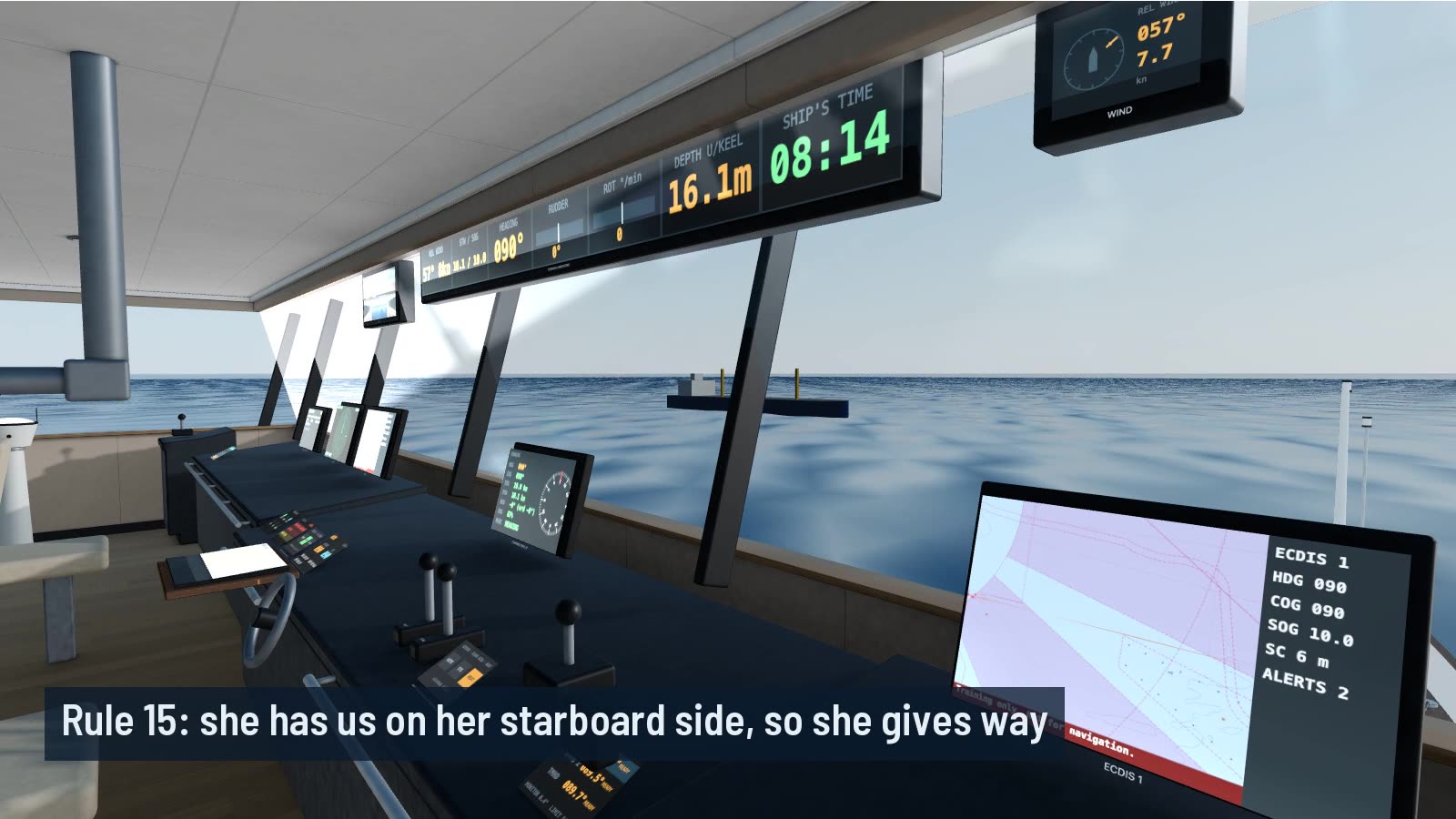
What you do on the bridge
- The diver flag
- Read the hoists
- Distress or not
- The action card
The oral questions, and what a good answer covers
The key points are in our own words. In the course, these questions come once you have done the job.
Name as many signals of distress as you can.Often asked
A good answer covers:
- A gun or other explosive signal fired at intervals of about a minute
- A continuous sound with any fog signalling apparatus
- Rockets or shells throwing red stars, one at a time at short intervals
- SOS by any signalling method, and MAYDAY spoken by radio
- The flags N over C, or a square flag with a ball or something like one above or below it
- Flames on the vessel, a red parachute or hand flare, orange smoke
- Arms outstretched to each side, slowly and repeatedly raised and lowered
- A DSC distress alert, EPIRB signals, SART signals, and a dye marker
What do flags A, D, G, H, O and V mean?Often asked
A good answer covers:
- A: I have a diver down; keep well clear at slow speed
- D: keep clear of me; I am manoeuvring with difficulty
- G: I require a pilot (H: I have a pilot on board)
- O: man overboard
- V: I require assistance (W: I require medical assistance)
From the bridge you see orange smoke on the bow. Take me through what you do.Often asked
A good answer covers:
- Note the time, the bearing and range if known, and our own position, at once
- Call the master
- Listen on VHF 16, watch the DSC, and try to raise the vessel
- Tell the coast station or the rescue coordination centre what was seen, where and when
- Proceed to assist unless the master decides it is unreasonable or unnecessary; extra lookouts and rescue gear ready
- Record it all in the deck log
Show me on the bridgeThe action card is under Signals and SAR at the chart table. Read it through.
A white flare goes up from a fishing vessel crossing ahead of a ship. Is that distress?
A good answer covers:
- No. A white flare is used to attract attention or to warn of risk of collision
- Only the signals in Annex IV mean distress; using anything that could be confused with them otherwise is prohibited
- Still watch her, and be ready to act if anything changes
How the lesson runs
The tutor's narration from the lesson, step by step. On the bridge, each control lights up as it is named.
Brief
We're stopped off Sandy Hook with our divers down from the tender. Other vessels need to know to keep clear, so the right flag must be flying.
Then the lookout will report flags on other vessels, and signals seen. Read each one carefully. If one is distress, work the action card straight away.
The diver flag
Divers down means flag A: keep well clear at slow speed. Hoist it within two minutes, and keep it up while they are in the water.
Read the hoists
When the lookout reports a hoist, read it from the flags themselves, then check its meaning in the code. It tells you what that vessel is doing, and often what she needs from you.
Distress or not
Not every flare is a distress signal. The distress signals are a fixed list, so know it by heart.
Read each signal the lookout reports as distress or not. Missing a real one costs lives, and calling a false one ties up the rescue services.
The action card
For a distress, the first thing is the time, the bearing and our position. A signal seen once may not be seen again, and that note is what the rescue centre needs. Then work down the rest of the card within ten minutes.
The rules and guidance behind it
- COLREG Annex IV: distress signals
Do it, then explain it.
Read the answers here for free. With a pass you work this lesson on the bridge, then practise its questions and mark your answers.