Identifying lights at night, and fixing on them
Time each light, find it in the List of Lights by its characteristic and position, then fix on three.
- Phase 3: Fixing the position
- 3 steps on the bridge
- 4 oral questions
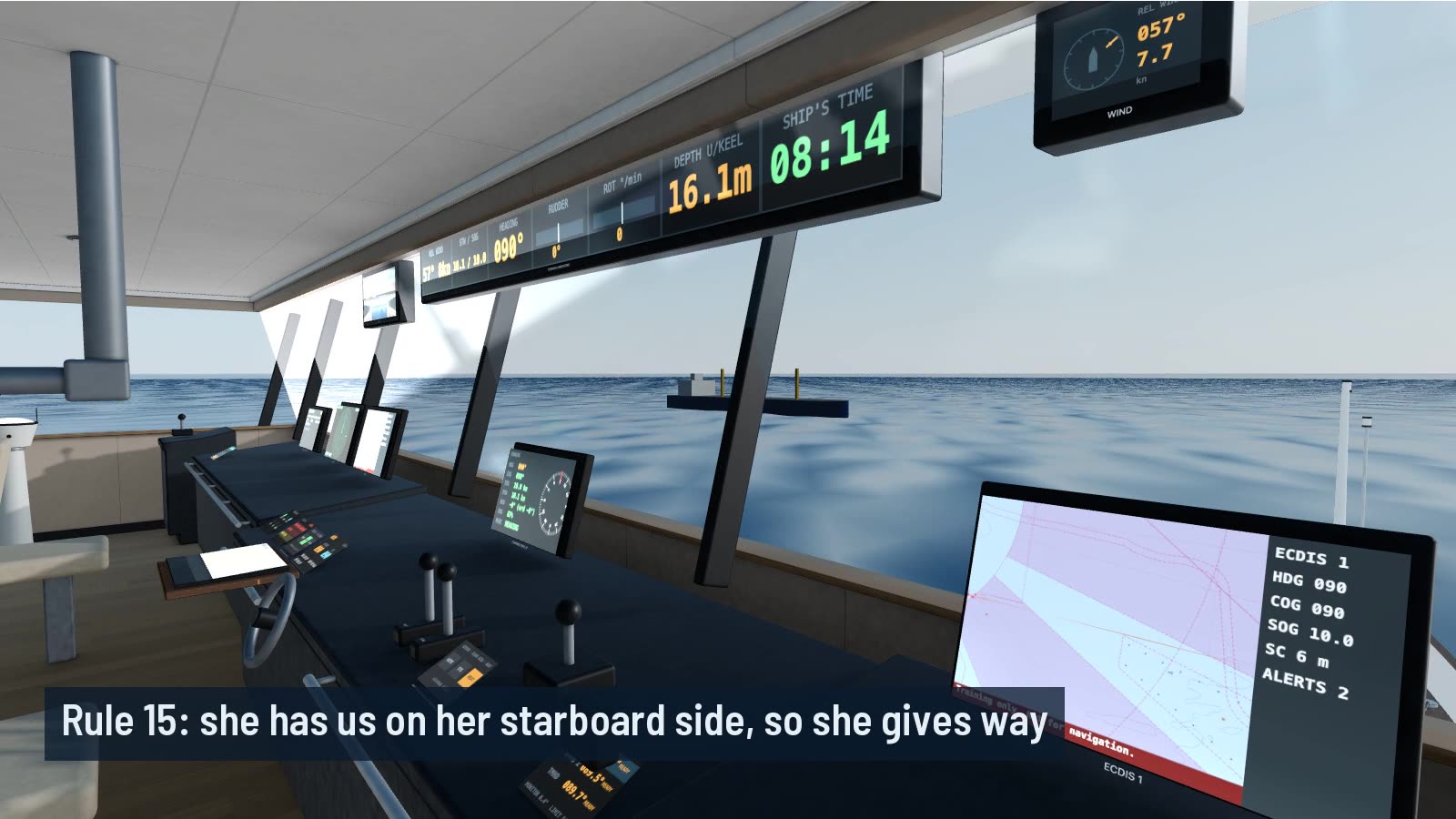
What you do on the bridge
- Identify three lights
- No wrong names
- Fix on the lights
The oral questions, and what a good answer covers
The key points are in our own words. In the course, these questions come once you have done the job.
You see a light on the bow at night. How do you identify it?Often asked
A good answer covers:
- Note its colour and time its characteristic over several periods with a stopwatch
- Take its bearing, and estimate where it should be from the DR or the last fix
- Look for lights of that characteristic near that bearing on the chart and in the List of Lights
- Check the sector, the elevation and the range: could it be seen from here at all?
- Never identify a light on its characteristic alone where two lights share it
Show me on the bridgePick a light, time it, and say what you think it is.
Explain these characteristics: Fl(2) 10s, Oc 4s, Iso 6s, Q, and Mo(A).Often asked
A good answer covers:
- Fl(2) 10s: groups of two flashes, the whole pattern repeating every 10 seconds
- Oc 4s: occulting, light longer than dark, eclipsed once every 4 seconds
- Iso 6s: isophase, equal light and dark, the period 6 seconds
- Mo(A): Morse code A, a short then a long, often used on safe water marks
How would you recognise the four cardinal marks at night?
A good answer covers:
- All show a white light, quick or very quick flashing
- North: continuous flashing
- East: groups of three
- South: groups of six followed by a long flash
- West: groups of nine
- Think of a clock face: three, six and nine
What is the difference between the luminous range, the nominal range and the geographical range of a light?
A good answer covers:
- Luminous range: how far the light can be seen given its intensity and the visibility at the time
- Geographical range: how far it can be seen over the curve of the earth, from its elevation and the height of eye
- A light can only be seen at the lesser of the luminous and geographical ranges
How the lesson runs
The tutor's narration from the lesson, step by step. On the bridge, each control lights up as it is named.
Brief
It's night, and we're stopped where the Sandy Hook and Ambrose channels meet. There are lights all round us, and none of them has a name until we give it one.
We'll take a bearing of a light, time its characteristic, find it in the List of Lights, and name it. Three lights named correctly, then a fix on them.
Identify three lights
Go to a wing repeater, line up a light and take its bearing. Then time it with the stopwatch: start on the first flash of a group, and mark the start of the next group. That's the period.
Now find it in the List of Lights. Match the colour, the characteristic and the period, and check its position fits the bearing from where we are.
No wrong names
Be careful: two safe water buoys here both show Morse A. The characteristic alone can't tell them apart, only the bearing and the position can. A wrongly named light puts the fix somewhere you are not.
Fix on the lights
Now fix on three named lights. Three lines give a cocked hat, and a small one tells you the bearings and the names agree. This fix has to be within two tenths of a mile.
The rules and guidance behind it
- List of Lights: how an entry is laid out (simulator publication)
Do it, then explain it.
Read the answers here for free. With a pass you work this lesson on the bridge, then practise its questions and mark your answers.