Sunset: navigation lights and the evening routine
The right lights on by sunset and nothing else, a sidelight lamp changed over, and the weather in the deck log.
- Phase 1: The bridge, one piece of equipment at a time
- 3 steps on the bridge
- 4 oral questions
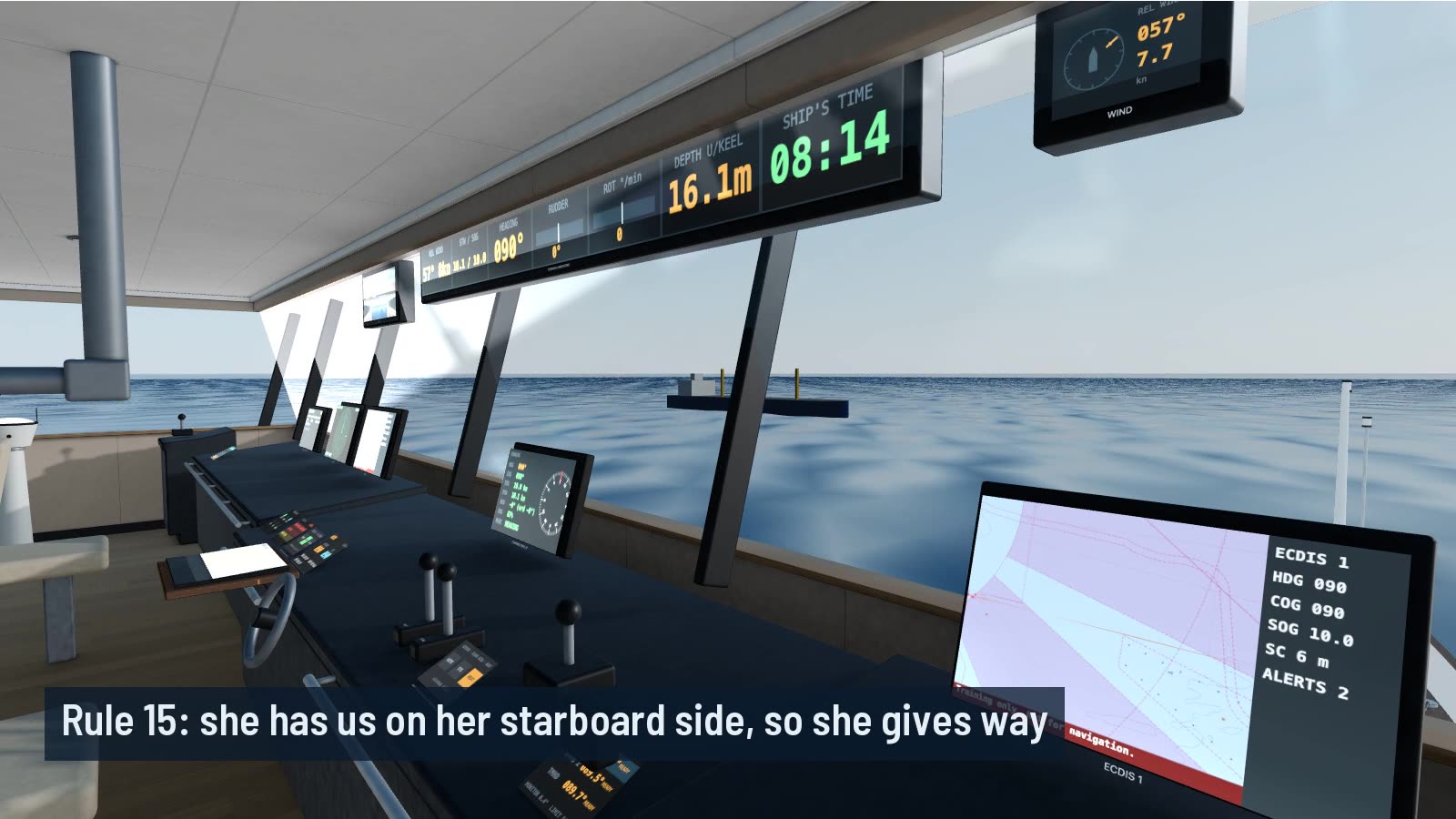
What you do on the bridge
- Lights on
- Weather in the deck log
- Lamp failure
The oral questions, and what a good answer covers
The key points are in our own words. In the course, these questions come once you have done the job.
When must navigation lights be shown?Often asked
A good answer covers:
- From sunset to sunrise, in all weathers
- In restricted visibility, by day as well
- And at any other time it is thought necessary
- No other lights that could be mistaken for them, spoil their visibility or distinctive character, or hinder the lookout
Describe the lights of an 82 metre power-driven yacht under way, with their arcs and ranges.Often asked
A good answer covers:
- Two masthead lights, the after one higher: white, 225 degrees, from right ahead to 22.5 degrees abaft the beam each side
- Sidelights, red to port and green to starboard: 112.5 degrees each, from right ahead to 22.5 degrees abaft the beam
- Sternlight: white, 135 degrees, 67.5 degrees each side of right astern
- 50 metres or more: masthead lights 6 miles; sidelights, sternlight, towing and all-round lights 3 miles
- The second masthead light is optional under 50 metres, required at 50 metres and over
Show me on the bridgeLook at the navigation light panel and say which lights she needs tonight.
A sidelight fails at night. What do you do?
A good answer covers:
- Acknowledge the lamp failure alarm, and switch to the spare lamp or the other circuit at once
- Check from outside that the light is actually showing
- If it cannot be restored, rig the emergency or spare light and tell the master
- Log the failure, the time and what was done, and report the defect
What else belongs in an evening routine as the sun goes down?
A good answer covers:
- Lights on before sunset and checked, and the deck and accommodation lights not dazzling or confusing
- Weather observation in the deck log: wind, sea, visibility, pressure and its trend, temperature
- Wheelhouse lighting down and the radar and ECDIS palettes changed for night vision
How the lesson runs
The tutor's narration from the lesson, step by step. On the bridge, each control lights up as it is named.
Brief
We're in open water east of the Ambrose Channel, and sunset is in about eighteen minutes. The navigation lights are still off.
Before the sun goes, we'll put the right lights on and nothing else, and write up the weather. Later in the watch, keep an eye on that light panel.
Lights on
We're power-driven, under way and over fifty metres, so we need two masthead lights, both sidelights and the sternlight. On by sunset, not after it.
And nothing else. Anchor lights or any other light alongside them would tell other vessels something that isn't true.
Weather in the deck log
Around sunset, write up the weather in the deck log: wind, sea, visibility, pressure and temperature. Read the instruments rather than guess. The barometer trend matters as much as the reading.
Lamp failure
Later on, the starboard sidelight lamp fails. Without it, a vessel on our starboard side can't tell which way we're heading. Acknowledge the alarm and switch to the spare lamp within two minutes.
The rules and guidance behind it
- COLREG Rule 20: application of the lights rules
- COLREG Rule 21: definitions of lights and their arcs
- COLREG Rule 23: power-driven vessels under way
Do it, then explain it.
Read the answers here for free. With a pass you work this lesson on the bridge, then practise its questions and mark your answers.