A clearing bearing past a wreck
Clear a dangerous wreck on a bearing of a charted light, check it as you pass, and find the set and drift of the stream.
- Phase 3: Fixing the position
- 3 steps on the bridge
- 4 oral questions
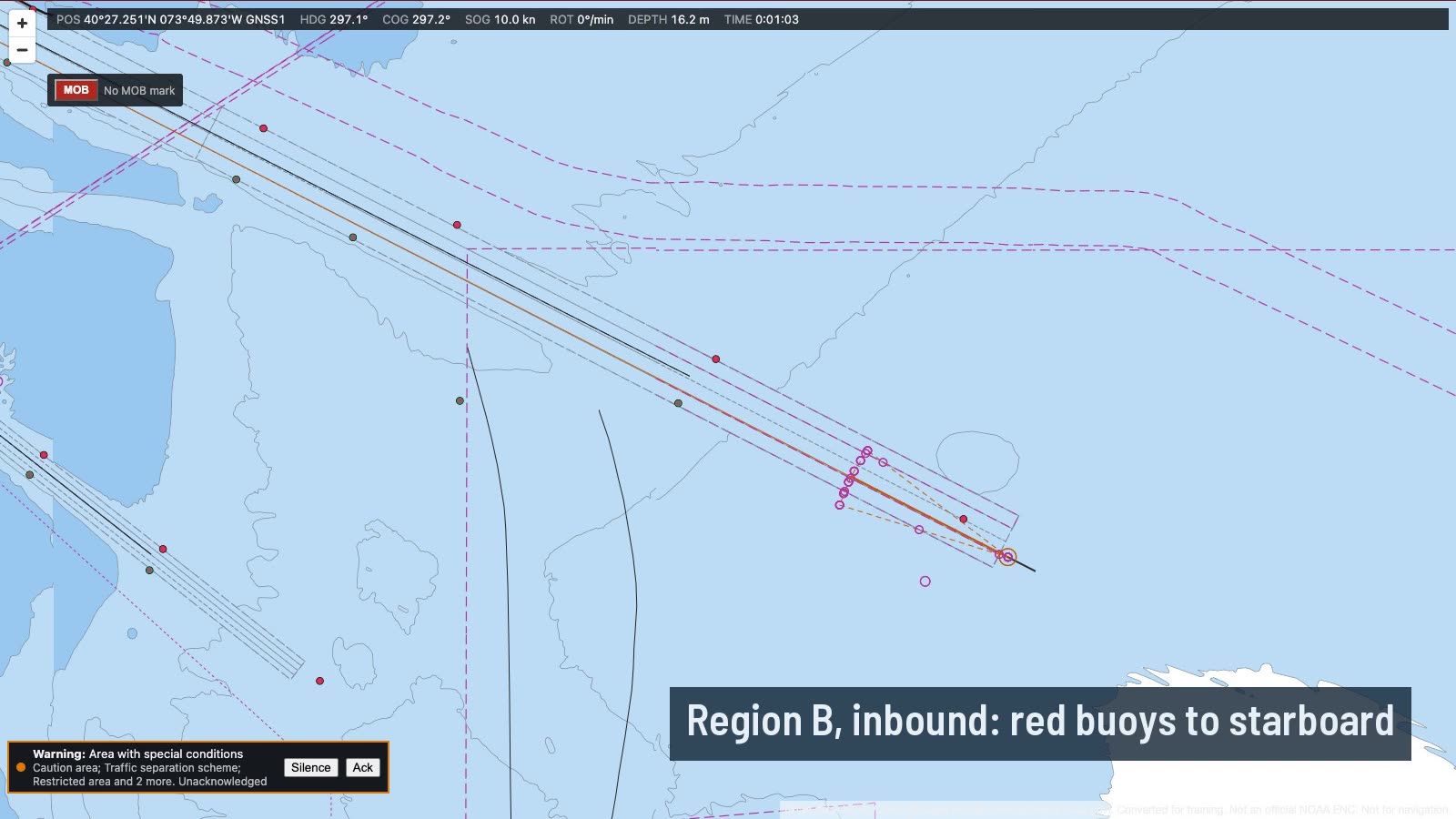
What you do on the bridge
- Draw the clearing bearing
- Check it as you pass
- Set and drift
The oral questions, and what a good answer covers
The key points are in our own words. In the course, these questions come once you have done the job.
What is a clearing bearing, and how do you set one up?Often asked
A good answer covers:
- A line of bearing on a charted mark that keeps the ship clear of a danger without fixing
- Drawn on the chart in advance, through the mark and clear of the danger with a margin
- Labelled not more than or not less than, with the dangerous side hatched
- The mark must be easily identified, and ideally well beyond the danger so the bearing changes slowly
- Check the bearing often as you pass, allowing for compass error
Show me on the bridgeThe wreck is four miles ahead, half a mile to port of the line. Find a mark to clear it on.
How do you tell whether a clearing bearing should be not more than or not less than?Often asked
A good answer covers:
- Imagine the ship on the dangerous side of the line and take the bearing of the mark from there
- If that bearing is greater than the clearing bearing, safe is not more than
- If it is smaller, safe is not less than
- Always check it on the chart; it is easy to get the wrong way round
How do you find the set and drift, and what do you use them for?Often asked
A good answer covers:
- Lay off a DR from a known position by course and speed through the water
- Fix the ship at a later time
- The set is the direction from the DR to the fix: where the stream is going
- The drift is the distance between them divided by the time, in knots
- Use it for the EP and the course to steer on the next leg, and compare with the tidal diamonds
Apart from a clearing bearing, how else can you keep clear of a danger in coastal waters?
A good answer covers:
- A clearing range or parallel index line on the radar
- A danger angle, vertical or horizontal, with the sextant
- A transit of two charted objects, which needs no compass
- A depth contour you must not cross, used with care
How the lesson runs
The tutor's narration from the lesson, step by step. On the bridge, each control lights up as it is named.
Brief
We're heading south south west at ten knots off the New Jersey shore. Four miles ahead there's a dangerous wreck, depth unknown, about half a mile to port of our line. Beyond it is Manasquan Inlet Light 3, nearly in line with our course.
We'll draw a clearing bearing on that light before we get near the wreck, check it with bearings as we pass, and stay on the safe side. Then we'll fix and find the tidal stream.
Draw the clearing bearing
At the chart table, choose Clearing bearing and click the light. Draw the line from the light so it passes at least a tenth of a mile clear of the wreck, on the side away from it.
Then decide which side is safe. Picture the ship over on the wreck's side and ask what the light would bear from there. That tells you whether it's not more than or not less than. Draw it well before the wreck, or it's no help.
Check it as you pass
As we come up to the wreck, go to a wing and take bearings of the light with T, at least twice while we are passing. Allow for any gyro error before you compare them with the line.
If the bearing goes the wrong side of the clearing bearing, alter away at once. Don't wait for the next bearing to confirm it.
Set and drift
Now lay off a DR from an earlier fix with the DR tool, using our course and speed through the water. Then fix the ship for the same time.
With Set and drift found, choose that DR and that fix, and measure the direction and distance from one to the other. Divide the distance by the time for the drift. It should agree with the real stream within thirty degrees and four tenths of a knot.
Do it, then explain it.
Read the answers here for free. With a pass you work this lesson on the bridge, then practise its questions and mark your answers.