BNWAS test
Test every stage, every reset device and the emergency call, find the faulty reset, and leave the BNWAS as the master set it.
- Phase 1: The bridge, one piece of equipment at a time
- 6 steps on the bridge
- 4 oral questions
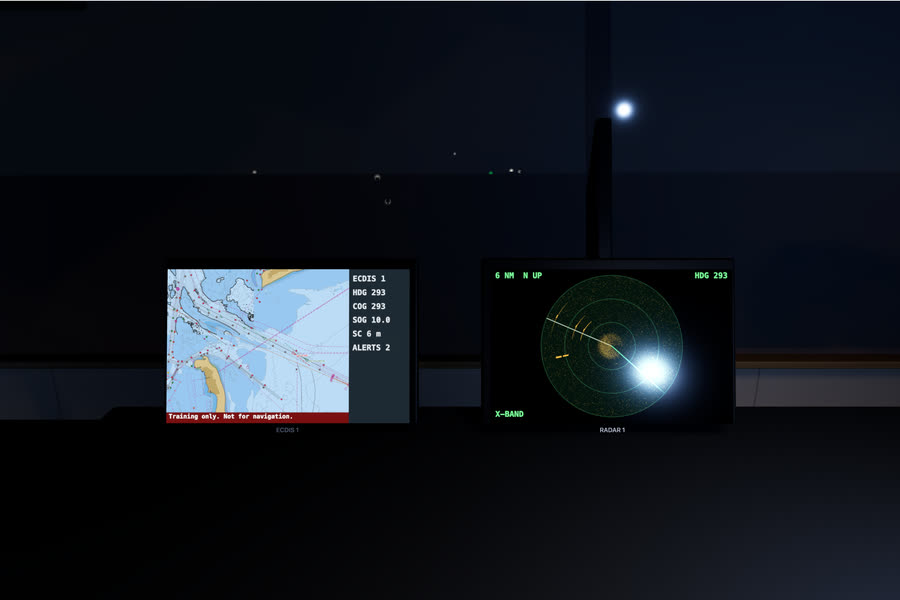
What you do on the bridge
- Key in, manual on, three minutes
- Every reset device
- Visual stage
- Master's cabin stage
- Emergency call
- Leave it as the Master set it
The oral questions, and what a good answer covers
The key points are in our own words. In the course, these questions come once you have done the job.
What is a BNWAS for, and how does it work when nobody resets it?Often asked
A good answer covers:
- It checks the officer of the watch is awake and on the bridge, and calls help if not
- After the dormant period, set between 3 and 12 minutes, a visual indication on the bridge
- Then an audible alarm on the bridge, 15 seconds after the visual one
- Then, 15 seconds later, the alarm at the master and the back-up officer, and 90 seconds after that (up to 3 minutes on larger ships) at other crew locations
- The emergency call sends it straight to the master and back-up officer
Show me on the bridgeOpen the BNWAS panel: mode, dormant timer, stage lamps and the reset.
What are the operating modes, and who may change them?Often asked
A good answer covers:
- Automatic: running whenever the autopilot or track control is engaged
- Manual on: always running
- Manual off: not running
- Mode and dormant period are protected by the master's key or a password, so the watch cannot change them
Where can it be reset, and what counts as a reset?
A good answer covers:
- Only at bridge positions where the officer can keep a proper lookout
- One deliberate action by the officer resets it and starts a full dormant period
- A button held or stuck in must not keep resetting it
- Some sets also accept a reset from other bridge equipment or a movement sensor; flag and class views differ, so follow the yacht's approved set-up
- Every reset device is tried in a test, and a faulty one reported and logged
Show me on the bridgeThe starboard wing. Try its reset and see whether the dormant timer starts again.
How would you test the BNWAS, and how do you leave it?
A good answer covers:
- With the master's permission and the key, set manual on and a short dormant period
- Let each stage run and reset at the right moment, warning the master and crew before their alarms sound
- Try every reset device and the emergency call
- Put the mode and dormant period back exactly as the master set them, and take the key out
- Log the test, and report any defect
How the lesson runs
The tutor's narration from the lesson, step by step. On the bridge, each control lights up as it is named.
Brief
We're at sea on the autopilot, with the BNWAS in automatic on a nine minute dormant period. That's how the Master set it, and that's how we'll leave it.
For the test we take the Master's key, run it in manual on with a short period, see every stage, try every reset and the emergency call, then put it all back. Warn the Master before his alarm sounds.
Key in, manual on, three minutes
Insert the Master's key, set manual on so it runs whatever the autopilot does, and set the dormant period to three minutes, the shortest it allows. Then we aren't waiting nine minutes for each stage.
Every reset device
While the timer runs, try each reset device in turn: the panel itself, then the helm, the ECDIS and radar position, the port console and the port wing. Watch the timer start again each time.
Then try the starboard wing. If the timer doesn't start again, that device is faulty. Report it to the Master from the panel.
Visual stage
Now let the timer run out. The bridge visual lamp comes on first. Reset within fifteen seconds, before the bridge audible alarm sounds. That's the stage a wakeful officer should normally see and answer.
Master's cabin stage
Next time round, leave it. Let the bridge alarm sound and wait until the Master's cabin lamp comes on, then reset. That proves the call to the Master works. Warn the Master before it sounds.
Emergency call
Press the emergency call. It goes straight to the Master and the back-up officer, so the watch can get help at once. Then reset it.
Leave it as the Master set it
Last, put it back: automatic, nine minutes, no alarm running, and the key out. A BNWAS left in manual off, or on a long period, is no protection at all.
Do it, then explain it.
Read the answers here for free. With a pass you work this lesson on the bridge, then practise its questions and mark your answers.