Anchoring and the anchor watch
Slow approach, stop, gentle sternway, let go and pay out; then the anchor position, the watch circle, and what to do when she drags.
- Phase 6: Emergencies and ship handling
- 6 steps on the bridge
- 4 oral questions
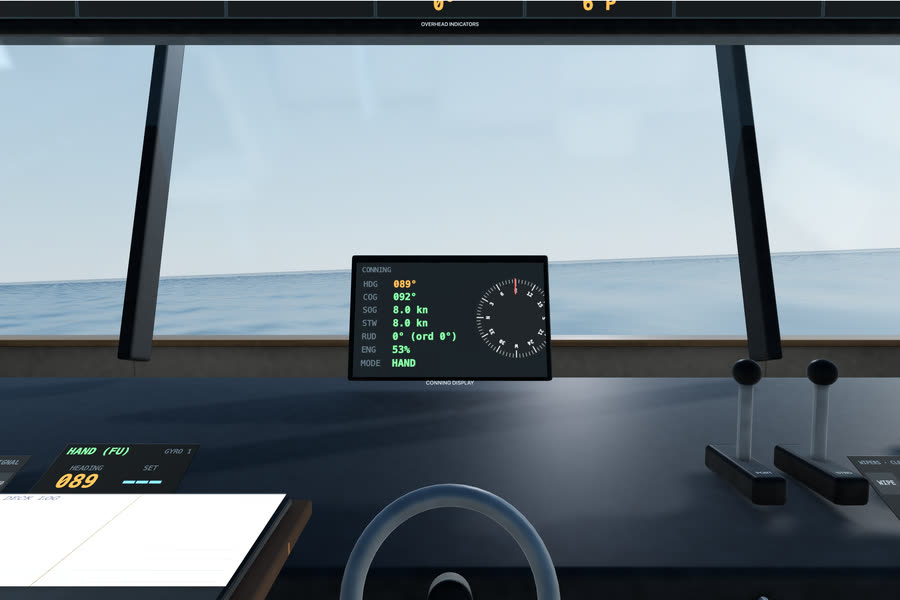
What you do on the bridge
- Slow approach
- Stop and let go
- Pay out and bring up
- Anchor position and watch circle
- Deck log
- She is dragging
The oral questions, and what a good answer covers
The key points are in our own words. In the course, these questions come once you have done the job.
How much cable do you put out, and what makes you put out more?Often asked
A good answer covers:
- More in strong wind, a strong stream, poor holding ground or a long stay
- Enough swinging room for the cable plus the length of the yacht
- The cable should lead well out and the anchor must be dug in before you leave it
Show me on the bridgeTen metres of water at the berth. Work out the cable before you let go.
Describe how you bring the yacht to the anchor berth and let go.Often asked
A good answer covers:
- Approach slowly, ideally heading into the wind or stream, whichever is stronger
- Stop at the berth, then a touch of sternway so the cable lays out clear
- Let go, then pay out under the brake, not all at once
- Brought up when the cable rises and then slackens and she lies quietly to it
- Fix the anchor position and set the anchor watch
What do you check on an anchor watch?Often asked
A good answer covers:
- Position by fixes and bearings at regular intervals, and the ECDIS anchor watch circle
- Weather, tide and sea state, and any forecast change
- Anchor lights or shapes shown and the signals of nearby vessels
- Engines and crew ready if the weather turns
- A proper lookout, and the deck log kept up
Show me on the bridgeOnce brought up, look for the anchor mark and the watch circle.
How do you know she is dragging, and what do you do?Often asked
A good answer covers:
- Position moving out of the swing circle and the anchor watch alarm
- Bearings changing steadily the same way, and the cable jerking or lying slack then taut
- Call the Master at once
- Start the engines and use them to take the weight off the cable
- Pay out more cable, or heave up and re-anchor, and warn nearby vessels
Show me on the bridgeA squall is coming. Watch the distance from the anchor.
How the lesson runs
The tutor's narration from the lesson, step by step. On the bridge, each control lights up as it is named.
Brief
We're going to anchor in Gravesend Bay, in about ten metres. We come in slowly, stop at the berth, and let the anchor go with a little sternway on.
Then we pay out the cable, wait until she's brought up, and mark the anchor position and an anchor watch circle on the ECDIS. After that, keep a good watch.
Slow approach
Bring the speed right down as you close the berth. Four knots or less in the last half mile, so you can stop where you want to.
Stop and let go
Stop her at the berth, then a little astern so she just gathers sternway. With no headway on, let go the anchor from the windlass.
Pay out and bring up
Pay out to at least three times the depth, then put the brake on. Four shackles is a good figure here. Wait for her to lie quietly to the cable.
Anchor position and watch circle
Mark the anchor position on the ECDIS. Then set the anchor watch circle: the cable out, plus the length of the yacht, with a little margin.
Deck log
Write it in the deck log: the time, the position, the depth and the cable out.
She is dragging
The wind has got up. If the anchor watch alarm sounds, or the bosun says she's dragging, call the Master straight away and get the engines working ahead to take the weight off.
Do it, then explain it.
Read the answers here for free. With a pass you work this lesson on the bridge, then practise its questions and mark your answers.