Berthing from the wing
Take control at the port wing, come in slowly, land softly on the fenders and lie alongside the pontoon.
- Phase 6: Emergencies and ship handling
- 3 steps on the bridge
- 4 oral questions
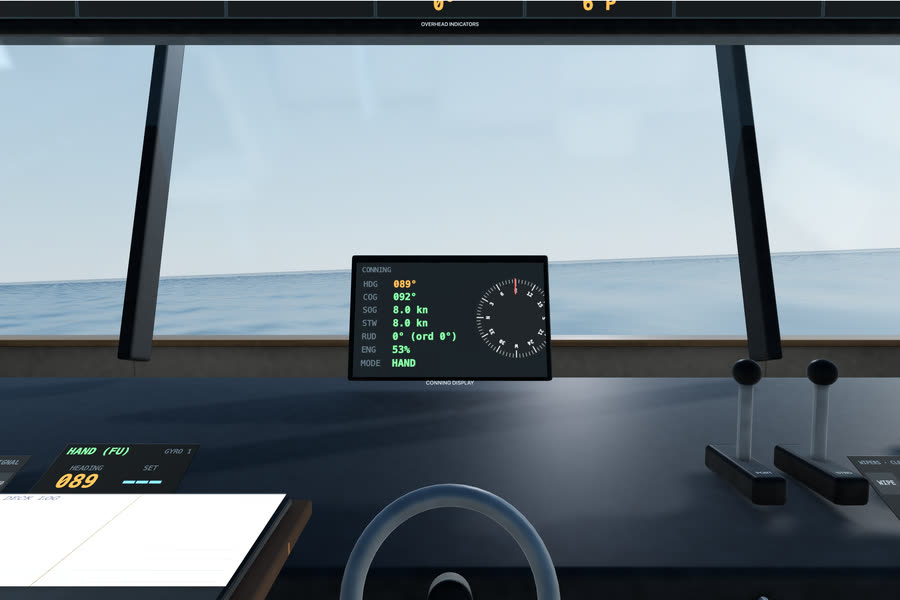
What you do on the bridge
- Take control at the port wing
- Slow approach
- Soft landing, and lie alongside
The oral questions, and what a good answer covers
The key points are in our own words. In the course, these questions come once you have done the job.
You are coming alongside a berth. What do you think about before you start the approach?Often asked
A good answer covers:
- Wind and current: their strength and direction against the berth, and which way they will set her
- Which side to, the line of approach and the speed at each stage, and an abort plan
- Where to con from: the wing on the berth side, so you can see the gap and the fenders
- Engines, thrusters and steering tested, and both steering pumps running
- The deck crew briefed: fenders, lines, the order they go out, and how they will talk to you
Show me on the bridgeFrom the port wing: the pontoon ahead to port, and your line of approach.
Why come in so slowly, and how do you judge your speed and the gap?Often asked
A good answer covers:
- The energy in a contact grows with the square of the speed, so a small speed makes a big difference
- Take the way off early: a twin screw yacht stops with astern power, but it takes time and distance
- Close the last few metres sideways, as near parallel as you can, so the whole fendered side lands together
How do you use the thrusters and twin screws to put her alongside?
A good answer covers:
- Bow and stern thrusters together walk her sideways; opposite ways turn her on the spot
- Twin screws: one ahead and one astern turn her with little headway
- The joystick blends engines and thrusters for the movement you ask for
- Know what each control does at the wing before you need it
Show me on the bridgeOpen the port wing docking console and find the joystick, the levers and the thrusters.
There is a fresh wind blowing her off the berth. How does that change your approach?
A good answer covers:
- A yacht has high topsides and little draught, so the wind has a big effect, especially at slow speed
- Approach at a steeper angle, or closer upwind, and allow for her being set off
- Get the first line on and use it, the thrusters or the engines to hold her in
- If the wind is too strong for the thrusters, wait or use another berth: say so to the Master early
How the lesson runs
The tutor's narration from the lesson, step by step. On the bridge, each control lights up as it is named.
Brief
We're putting her port side to a training pontoon. She's about a hundred and fifty metres astern of it and forty metres off, making three knots.
We con from the port wing, take the speed off well before the berth, close the last few metres slowly and land her gently, parallel to the face.
Take control at the port wing
Go to the port wing and take control there. That's the berth side, where you can see the gap closing and the fenders. Until you take control, the wing controls do nothing.
Slow approach
Bring her in towards the berth, and be at one and a half knots or less by the time you're thirty metres off. Over that, inside thirty metres, and the approach is too fast.
Keep coming in slowly until you are within five metres of the face.
Soft landing, and lie alongside
Land her on the fenders at no more than three tenths of a knot, every contact. Use the thrusters to bring her in sideways, with the bow and stern together.
Then hold her there: within one and a half metres of the face, parallel within five degrees, and stopped, for thirty seconds.
Do it, then explain it.
Read the answers here for free. With a pass you work this lesson on the bridge, then practise its questions and mark your answers.