Embarking a pilot
Call the pilot station, make a lee at the speed asked for, rig the ladder on the right side at the right height, and hold her until the pilot is aboard.
- Phase 6: Emergencies and ship handling
- 6 steps on the bridge
- 3 oral questions
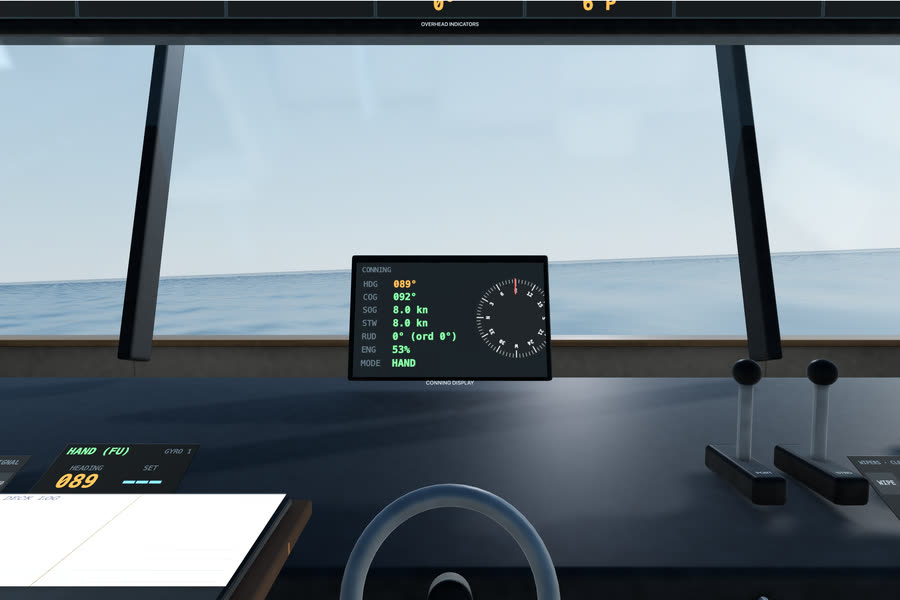
What you do on the bridge
- Call the pilot station
- Make a lee
- Speed six knots
- Rig the ladder
- The boarding point
- Pilot aboard
The oral questions, and what a good answer covers
The key points are in our own words. In the course, these questions come once you have done the job.
What are the requirements for rigging a pilot ladder?Often asked
A good answer covers:
- A ladder that is certified, in good condition, and secured to strong points on deck, not to the rails
- Rigged clear of discharges and of the ship's flare, on the side and at the height the pilot asked for
- A lifebuoy with a self-igniting light and a heaving line at hand, and the boarding point lit at night
- Rigged and checked by a responsible officer, who is at the boarding point in touch with the bridge while the pilot boards
Show me on the bridgeAt the port wing console: the pilot boarding section, the ladder and its fittings.
How do you handle the ship for a pilot boarding?Often asked
A good answer covers:
- Call the pilot station in good time and agree the boarding side, the height of the ladder, the course and the speed
- Make a lee on the boarding side: wind and sea on the other side
- Keep a steady course and the speed asked for, usually a few knots, enough to steer but no more
- Keep a look-out for the pilot boat and avoid wheel or engine movements while she is alongside
- Tell the pilot station when the pilot is on board, and log the time
When would a pilot refuse to board, and what do you do?
A good answer covers:
- A ladder that is unsafe, wrongly rigged, at the wrong height, or on the wrong side
- No lee, too much speed, or the ship swinging
- Missing fittings: no lifebuoy, heaving line, lighting or officer
- Put it right straight away, tell the pilot station, and keep the ship clear of danger while you wait
How the lesson runs
The tutor's narration from the lesson, step by step. On the bridge, each control lights up as it is named.
Brief
We're inbound for the Ambrose approach at ten knots, with a fresh breeze from the north-north-west. It's time to take the pilot.
Call the pilot station, and do exactly what they ask: the side, the height of the ladder, the course and the speed. The pilot won't climb until it's all right.
Call the pilot station
At the port wing console, under pilot boarding, call the pilot station on VHF. Listen to what they ask for.
Make a lee
Alter to two five zero on the autopilot. That puts the wind on the starboard side, and gives the pilot boat a lee on the port side.
Speed six knots
Bring her down to six knots on the telegraph. Enough to steer well, slow enough for the boat to come alongside.
Rig the ladder
Have the ladder rigged on the port side, with the bottom one and a half metres above the water, as the pilot asked.
The boarding point
At the boarding point: a lifebuoy with its light, a heaving line, and an officer in touch with the bridge. Check each one.
Pilot aboard
Now hold her steady: course, speed, no wheel or engine movements while the boat is alongside. Listen to the pilot. If something isn't right, he'll tell you.
Do it, then explain it.
Read the answers here for free. With a pass you work this lesson on the bridge, then practise its questions and mark your answers.