Bridge team challenges: speaking up to the pilot
The pilot orders a course that takes her out of the channel. Check it, speak up, and escalate until it is put right.
- Phase 5: Passage planning and keeping the watch
- 3 steps on the bridge
- 3 oral questions
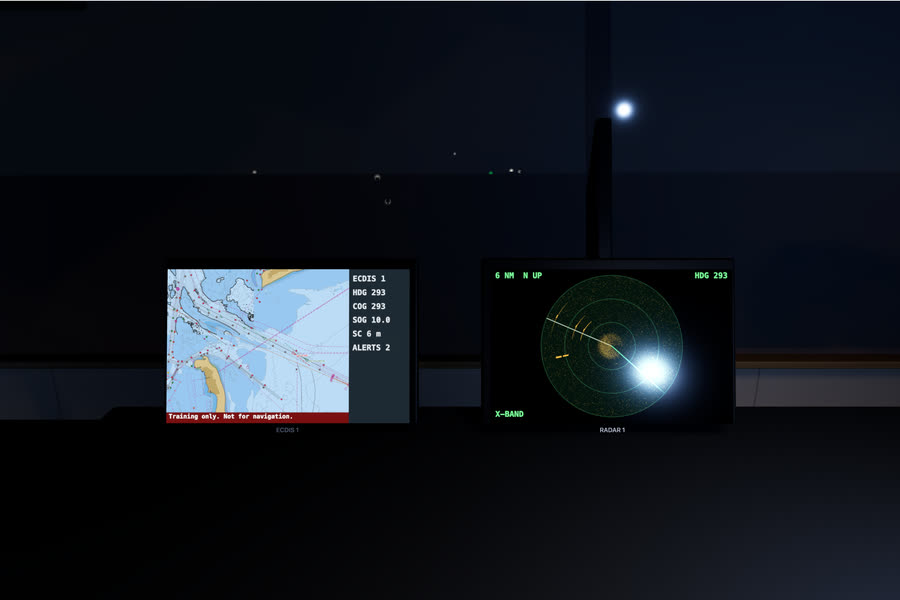
What you do on the bridge
- Speak up
- Escalate
- Back on the channel course
The oral questions, and what a good answer covers
The key points are in our own words. In the course, these questions come once you have done the job.
With a pilot on board, who is responsible for the ship, and what does the officer of the watch do?Often asked
A good answer covers:
- The pilot advises and cons, but the Master stays responsible for the ship, and the officer of the watch keeps the watch
- Exchange information with the pilot: the plan, the ship's handling, and anything unusual
- Monitor every order: check it against the plan, the chart and the ship's position and movement
- If in doubt about the pilot's actions, ask him; if still in doubt, tell the Master and act if the ship is in danger
- Keep the look-out, the radar and the ECDIS going, and the pilot informed
Show me on the bridgeAt the steering stand: the pilot's orders, and the ways to speak up about one.
You think the person conning has made a mistake. How do you raise it?Often asked
A good answer covers:
- Start with a question, so the mistake can be put right easily, or the reason explained
- If that does not settle it, state the concern plainly, with the facts: the course, the danger, the time
- If it still is not put right, challenge: say what is wrong and what you recommend
- If the ship is standing into danger and there is no time, act: take the con or call the Master, and say so
- Use names and clear words, and make sure you were heard
Why do junior officers sometimes fail to speak up, and how does a good bridge team prevent it?
A good answer covers:
- Rank and experience: reluctance to question the Master or the pilot
- Not being sure, or not wanting to look wrong
- A good team briefs the plan, invites challenge, and agrees how concerns are raised
- Closed-loop communication: orders repeated back and confirmed
How the lesson runs
The tutor's narration from the lesson, step by step. On the bridge, each control lights up as it is named.
Brief
Inbound in the Ambrose Channel at eight knots on the autopilot. The pilot has the con: he gives the courses, and they're set straight away.
You still keep the watch. Check each of his orders against the plan and the chart. If one looks wrong, say so.
Speak up
Listen to his orders at the steering stand. The channel course here is two nine three. If he orders something else, check it on the ECDIS, and if it's wrong, say so.
Escalate
He's brushed you off. Don't leave it there. Say plainly what's wrong and what you recommend: on three one zero we leave the channel; two nine three is the channel course.
Back on the channel course
He has put it right. Watch her come back to two nine three, and check her position in the channel.
Do it, then explain it.
Read the answers here for free. With a pass you work this lesson on the bridge, then practise its questions and mark your answers.