Reporting to the VTS inbound
Find the reporting points and the channel in the pilot book and radio list, and report at each point from inside its circle.
- Phase 5: Passage planning and keeping the watch
- 2 steps on the bridge
- 4 oral questions
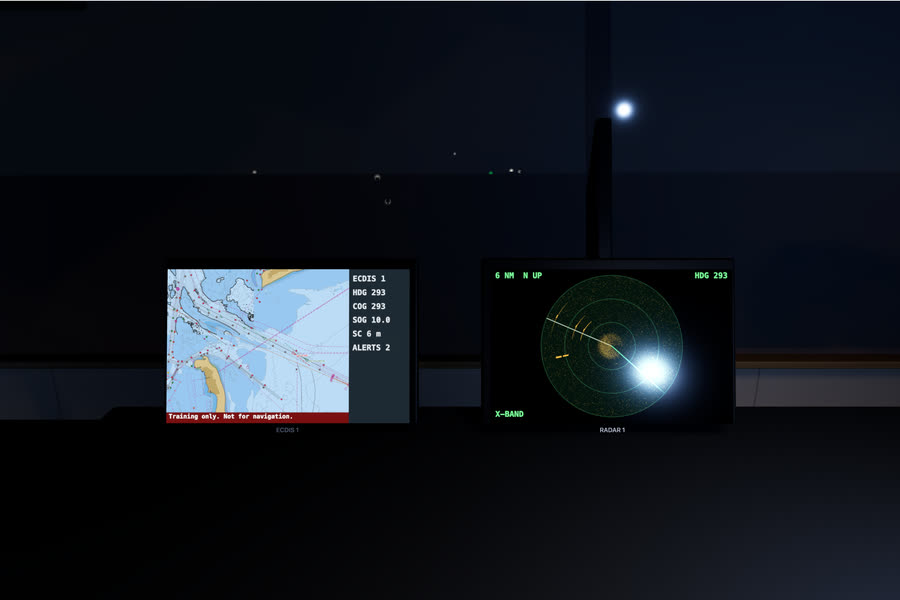
What you do on the bridge
- Report at Ambrose
- Report at buoys 7 and 8
The oral questions, and what a good answer covers
The key points are in our own words. In the course, these questions come once you have done the job.
What is a VTS, and what can it do for you?Often asked
A good answer covers:
- A shore service that watches and manages traffic in a port or busy area, set up by the coastal state
- An information service: traffic, hazards, weather and the state of the fairway, given at set times or when asked
- Navigational assistance, where it is offered, to help a ship that asks for it or needs it
- Traffic organisation: planning movements to prevent dangerous situations
- The master stays responsible for the ship, and the rules of the road still apply
Where do you find a VTS's reporting points and channels, and when do you look?Often asked
A good answer covers:
- At the passage planning stage, so the points are on the chart and in the plan before you arrive
- The pilot book, or sailing directions, for the points and what each report must contain
- The radio list for the VTS name, its channels and hours
- Chart notes and the port guide, and the latest notices to mariners for any changes
- Check the channel against the latest correction: channels do change
Show me on the bridgeChart table, Pilot and radio list. Find the reporting points and the VTS channel.
How do you make a report to a VTS, and what goes in it?
A good answer covers:
- Listen on the channel first, so you do not talk over another ship
- Call the VTS by its name, then give your ship's name, and call sign if asked
- Your position as the reporting point, plus whatever the pilot book asks: destination, ETA, draught, defects
- Short and clear, in standard marine phrases
- Then keep a listening watch on the VTS channel until you leave the area
The VTS tells you something you think is unsafe. What do you do?
A good answer covers:
- The master and the officer of the watch stay responsible for the safe navigation of the ship
- Do not follow advice blindly: question it on the VTS channel and say what you intend to do
- The collision regulations still apply to every encounter
- Call the master, and log what was said and done
How the lesson runs
The tutor's narration from the lesson, step by step. On the bridge, each control lights up as it is named.
Brief
We're two miles east of the Ambrose buoy, inbound at ten knots. This area has a vessel traffic service, and it expects a report from us at each reporting point.
Before we get there, look it up. The pilot book gives the points and what to say. The radio list gives the VTS name and its channel.
Report at Ambrose
At the chart table, open the pilot and radio list. Lower Bay VTS works channel twelve. Port control is on another channel, and that's not the one to report to.
Set the VHF to channel twelve and wait until we're inside the one mile circle round Ambrose. Then call Lower Bay VTS, this is Sea Trainer, at Ambrose, with our destination and draught.
Report at buoys 7 and 8
The next point is buoys seven and eight, a smaller circle, three quarters of a mile. Report the same way when you're inside it, with our ETA at the Narrows.
Only call from inside a reporting point, and only on the VTS channel. A call too early, or on the wrong channel, just adds noise for everyone else.
Do it, then explain it.
Read the answers here for free. With a pass you work this lesson on the bridge, then practise its questions and mark your answers.