Bridge checks before departure
An hour before sailing: put the bridge right, from steering pumps to the course recorder, and tick the departure checklist.
- Phase 5: Passage planning and keeping the watch
- 9 steps on the bridge
- 3 oral questions
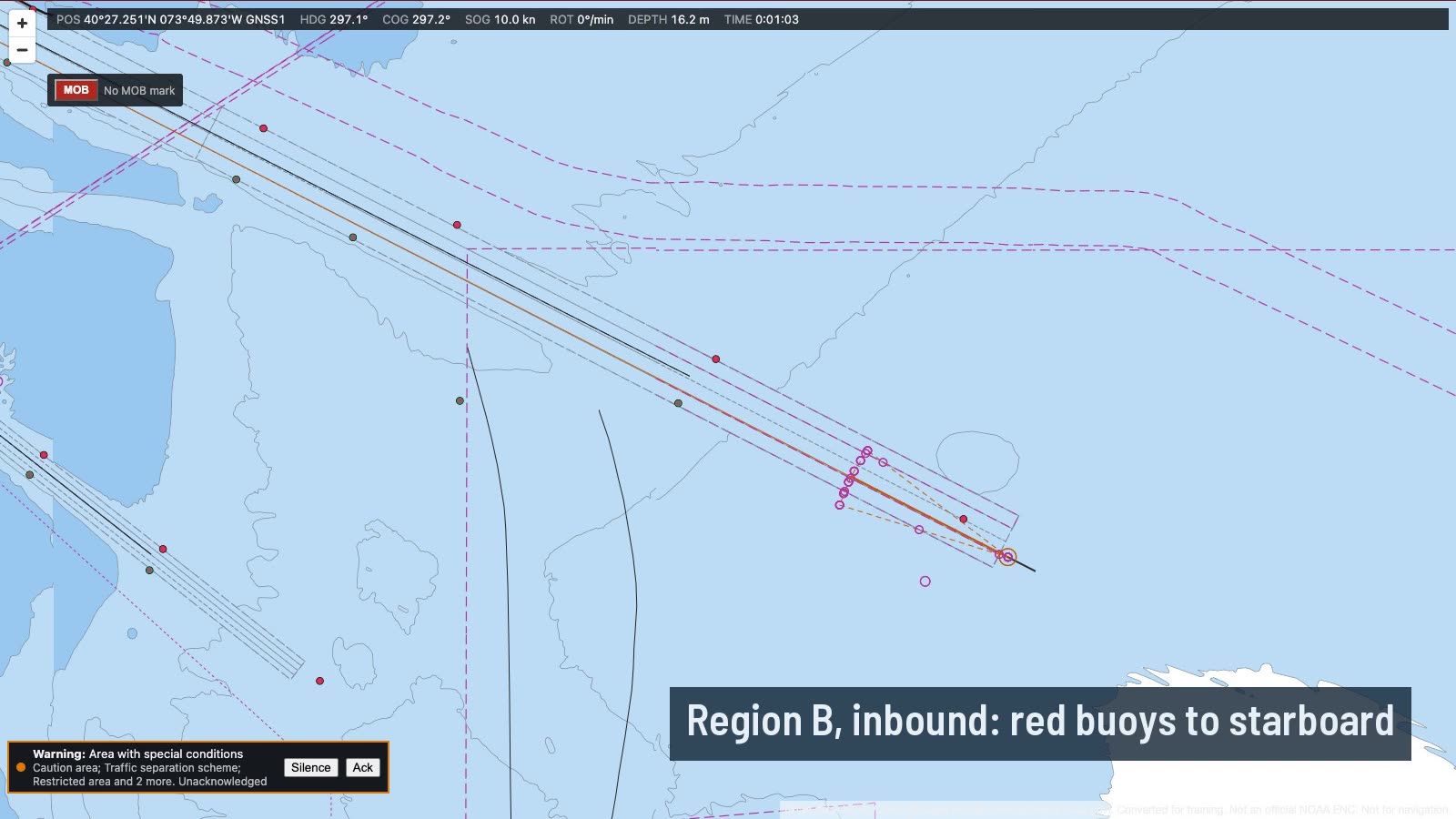
What you do on the bridge
- Steering pumps
- Course recorder
- BNWAS
- Radars
- ECDIS safety settings
- Echo sounder
- AIS voyage data
- Navigation lights
- The departure checklist
The oral questions, and what a good answer covers
The key points are in our own words. In the course, these questions come once you have done the job.
What do you check on the bridge before the ship sails?Often asked
A good answer covers:
- Passage plan approved by the master and briefed, with charts, ENCs and publications up to date for the voyage
- Compasses: gyro and repeaters aligned, gyro and magnetic compass compared and the error known
- Radars, ECDIS with its safety settings for the draught, echo sounder, AIS voyage data, all checked
- Navigation lights, signals, VHF and internal communications tested; BNWAS on; course recorder and VDR running
- Engines and thrusters tested with the engine room, telegraphs and clocks compared, and the checks logged
Show me on the bridgeThe bridge as it was left in port, an hour before sailing.
What on the AIS do you change before sailing?
A good answer covers:
- Navigational status from moored to under way using engine
- Draught: the actual maximum draught for this voyage
- Destination and ETA
- Check the static data and the position source are right, and persons on board if the system holds it
What is the course recorder for, and what do you check on it?
A good answer covers:
- It traces the heading, and on many ships the rudder angle, against time, as a record of the course steered
- Used to check the steering afterwards: the helmsman, the autopilot, and after an incident
- Check it is switched on and running before sailing, with the time set right
How the lesson runs
The tutor's narration from the lesson, step by step. On the bridge, each control lights up as it is named.
Brief
We sail in an hour. The bridge is as it was left when we came in: some of it is right, a lot of it is not.
Go round the bridge and put each thing right. Then we'll go through the departure checklist at the chart table, and you only tick what you've seen is so.
Steering pumps
Steering first. The test was done this morning; for the departure I want both pumps running.
Course recorder
While you're at the helm: the course recorder is on the heading panel. It's off. Switch it on and check it starts tracing.
BNWAS
The BNWAS was switched off alongside. Put it back on.
Radars
Both radars are on standby. Put both to transmit, and check the picture on each.
ECDIS safety settings
On the ECDIS the safety contour and depth are still at thirty metres. Set them for our draught, three point nine, plus the one metre of clearance in the master's orders.
Echo sounder
The echo sounder's draught says three point two. That was the old figure. Enter three point nine.
AIS voyage data
The AIS still says moored, with the arrival draught and no destination. Set it under way using engine, draught three point nine, and the destination.
Navigation lights
Test the navigation lights: switch on the steaming lights, both masthead lights, the sidelights and the sternlight, and check none has failed. We'll leave them on as we go out.
The departure checklist
Now the chart table: Orders and checklists, the departure list. Go down it and tick each item. Some, like the compasses, the radio and the engines, you'd check with the crew; here, take them as done.
Do it, then explain it.
Read the answers here for free. With a pass you work this lesson on the bridge, then practise its questions and mark your answers.