This week's notices: charts and publications
Work the whole weekly edition: correct the charts in ink or pencil, then the List of lights, the radio list and the pilot book, and record each.
- Phase 2: Publications and the chart table
- 5 steps on the bridge
- 4 oral questions
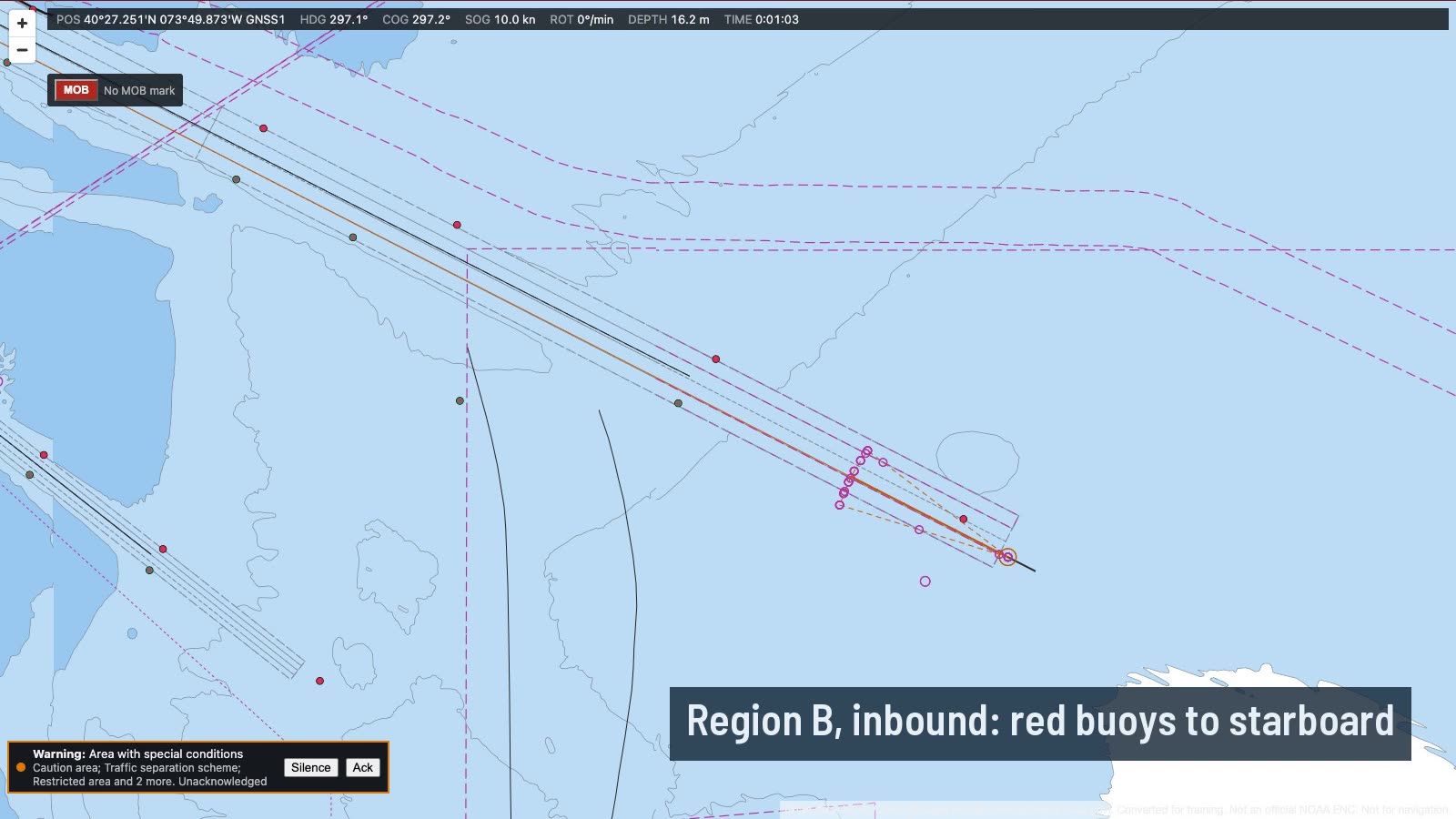
What you do on the bridge
- Permanent chart corrections
- Temporary chart correction
- The List of lights
- The radio list
- The pilot book
The oral questions, and what a good answer covers
The key points are in our own words. In the course, these questions come once you have done the job.
What's in a weekly edition of notices to mariners, and how do you work through it?Often asked
A good answer covers:
- An index of the charts and publications affected, so you can see at a glance what you hold that needs work
- Chart corrections, permanent, and a separate section of temporary and preliminary notices
- Navigational warnings in force, and new charts and editions
- Work from the index against the folio and the books you hold, and record everything you do
Show me on the bridgeChart table, Notices to mariners: start with Section I, the index.
One notice changes a light. What do you correct?Often asked
A good answer covers:
- Every chart you hold that shows the light, as the notice names them
- The List of lights entry for that light, as a separate correction in that book
- Each correction recorded: in the chart log, and in the book's record of corrections
- Otherwise the chart and the book disagree, and the light may be misidentified at night
Which nautical publications would you expect to find on the bridge, kept up to date?
A good answer covers:
- Charts for the intended voyage, paper or ENC with its back-up
- Sailing directions, the List of lights and the list of radio signals
- Tide tables and tidal stream atlases, and the notices to mariners themselves
- The nautical almanac, the International Code of Signals and IAMSAR volume III
What are the annual notices, and why read them?
A good answer covers:
- Notices issued once a year, with standing information that does not change week to week
- Things like distress and safety communications, navigational warnings, and cables and pipelines
- They also explain how to correct the charts and books
- A new officer should read them when joining, and again when they are reissued
How the lesson runs
The tutor's narration from the lesson, step by step. On the bridge, each control lights up as it is named.
Brief
This week's edition is in. Correcting the charts is only half of it: the books we navigate by need correcting too.
Start with the index in Section I to see what we hold that's affected. Then the chart corrections, then Sections four to six for the List of lights, the radio list and the pilot book.
Permanent chart corrections
4417 inserts a dangerous wreck on SIM 100 and SIM 120. 4418 changes the Lake Como outfall light on SIM 120. Both are permanent, so ink.
For each chart, take it out, put the correction at the notice position, and log the number on that same chart.
Temporary chart correction
4419 is a temporary survey buoy. Temporary and preliminary notices go in pencil, so they can be rubbed out when cancelled. Log it with its T.
The List of lights
4418 appears again in the lights section. The chart is done, but the List of lights still gives the old characteristic. Correct that entry too, or the book and the chart will disagree when you're timing the light at night.
The radio list
4420 changes the working channel of port control. If the radio list isn't corrected, we'll call on a channel nobody is listening to.
The pilot book
4421 reports shoaling in the Gravesend Bay anchorage. Correct the pilot book entry, because that's where we'll look when we plan to anchor there.
With every book correction, check the notice number, the book and the entry match. A correction against the wrong entry is worse than none.
Do it, then explain it.
Read the answers here for free. With a pass you work this lesson on the bridge, then practise its questions and mark your answers.