A tidal window over a shoal patch
Work the height of tide the crossing needs and when it comes, a secondary port height by the factor curve, then cross with enough water.
- Phase 2: Publications and the chart table
- 3 steps on the bridge
- 3 oral questions
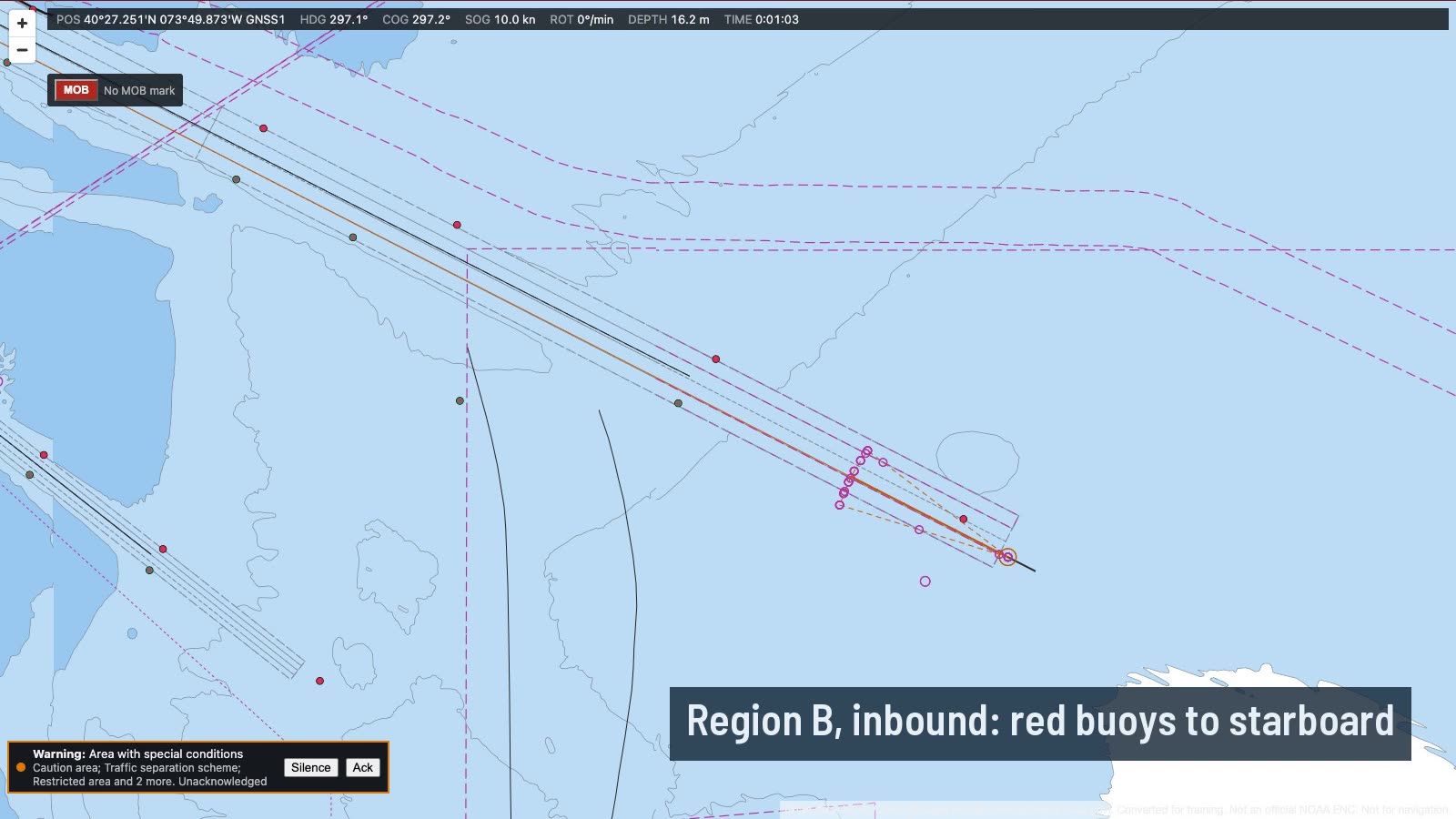
What you do on the bridge
- When is there enough water?
- A secondary port
- Cross the patch
The oral questions, and what a good answer covers
The key points are in our own words. In the course, these questions come once you have done the job.
How do you work out the height of tide you need to cross a shoal?Often asked
A good answer covers:
- Draught, plus the under keel clearance you need, less the charted depth
- The clearance from company or master's orders, more in a swell or when the survey is old
- Then find from the tables the times either side of high water that the tide is above that height
Show me on the bridgeThe 3 metre patch lies just north of us. We draw 3.9 metres.
Talk me through finding the height of tide at a secondary port at a given time.Often asked
A good answer covers:
- From the standard port tables, the times and heights of high and low water for the day
- Apply the secondary port differences, interpolating for the range, to get its own high and low waters
- Work out the time from high water and the range at the secondary port
- Enter the factor curve with the time from high water, read off the factor, springs or neaps as the range suggests
- Height is low water plus the factor times the range
Your tidal window is tight. What can make the real tide differ from the prediction?
A good answer covers:
- High pressure lowers the sea level, and low pressure raises it
- Strong offshore winds can hold the tide down, onshore winds can raise it
- Surges, river flow and seiches in some places
- Charted depths that have changed since the survey
- So leave a margin, cross near the middle of the window, and watch the echo sounder
How the lesson runs
The tutor's narration from the lesson, step by step. On the bridge, each control lights up as it is named.
Brief
We're stopped in five metres, just south of a three metre patch, and we need to go north across it. We draw 3.9 metres, so at low water we simply cannot cross.
We'll work out how much tide we need, find from the Sandy Hook tables when we'll have it, practise a secondary port height on the factor curve, and then take her across with at least half a metre under the keel.
When is there enough water?
First the height we need: our draught of 3.9 metres, plus half a metre under the keel, less the three metres charted. That is 1.4 metres of tide.
Open the tide tables at the chart table, and in Tidal calculation choose Sandy Hook and find the time the tide reaches that height on the rise. Fill in every step, and the check names the first one that is wrong.
A secondary port
Now a secondary port. Choose one from the list, and find the height of tide at a time. Apply its differences to the Sandy Hook high and low waters, then read the factor off the curve. Every step must be right, and the answer within ten centimetres.
Cross the patch
Once the tide is high enough, head north across the patch at a sensible speed. Keep an eye on the echo sounder: we need half a metre under the keel the whole way, not just on average.
If the water is less than you worked out, don't push on. Stop, back out, and find out why.
Do it, then explain it.
Read the answers here for free. With a pass you work this lesson on the bridge, then practise its questions and mark your answers.